
I first became aware of Sri Lanka as a travel destination in 2004, after the devastating tsunami struck the island’s south coast and claimed many lives, including tourists. Until then, it had never registered in my mind as a beach paradise. It simply wasn’t on my travel radar.
Fast forward to the past few years and suddenly everyone seemed to be talking about wanting to go to Sri Lanka or raving about their trips there, which definitely sparked my curiosity. By now, I’d seen pictures of the nice beaches and had heard about the iconic train journeys through the hill country. I’d had Sri Lankan food and loved it. But beyond these loose impressions, I honestly didn’t know what I was in for when I booked a flight to Colombo.
Only once I began planning did the full picture start to emerge. It turned out there was a whole world of history, ancient capitals, and sacred sites clustered in what’s known as the Cultural Triangle. I picked up a book, Return to Sri Lanka by Razeen Sally, which gave me a thoughtful introduction to the country’s past and present. I learned about the island’s diverse ethnic and religious makeup, the influence of Buddhism, and the roots of the 26-year civil war that only ended in 2009. All of this context helped me appreciate that Sri Lanka is not just beautiful beaches and tea plantations, but a place shaped by complex layers of identity, resilience, and history.
Trip Preparation
I travelled to Sri Lanka last April/May. I didn’t need a visa, but I did have to apply for an Electronic Travel Authorization (ETA) before arrival. The online application was straightforward, free of charge and quickly approved within a day or so. A Canadian friend who just visited Sri Lanka paid US$50 for his visa, which also seems to be the standard cost for Americans and most Europeans, although recently I read that the government is considering lowering visa fees for certain nationalities in an effort to boost tourism.
The official currency is the Sri Lankan Rupee (LKR), but many things geared towards tourists are priced in US dollars. That included my driver, hotel bookings on sites like Booking.com, entrance fees at major attractions, and even some upscale dining spots like the famous Ministry of Crab. Since my biggest expenses were quoted in USD, I brought some cash in USD as a backup to using a credit card, and planned to withdraw rupees from ATMs as needed.
It’s mostly shorts-and-T-shirt weather year-round in Sri Lanka, although it’s a good idea to pack a light jacket or sweater since it can get chilly in the hill country, especially evenings in Nuwara Eliya. There aren’t many clothing rules except when visiting temples and sacred sites. Shoulders and knees must be covered for both men and women. A lightweight wraparound or large cotton scarf comes in handy for those moments. There’s no need to need to buy one in advance though, since many temples have sarongs available to borrow. One other thing to keep in mind: hats and any sort of head covering are typically not allowed inside temples.
Arranging Transportation
Having driven in Saudi Arabia, I thought I could manage Sri Lanka too. I briefly considered renting a car, but every travel blog and forum I read advised against it — for good reason, as I would soon find out. While there are some great highways, driving in the hill country is a completely different story: narrow, winding roads, sharp turns, tuk tuks darting in and out, and buses that seem to own the road. It’s definitely not for the faint-hearted! Some travellers do rent tuk tuks to explore the country, which I can only imagine must be quite the adventure, in every sense of the word! Interestingly, the government has apparently recently made it easier for tourists to obtain tuk tuk and scooter driving licenses upon arrival at the airport, which is great news for those keen on a bit more freedom on the road.
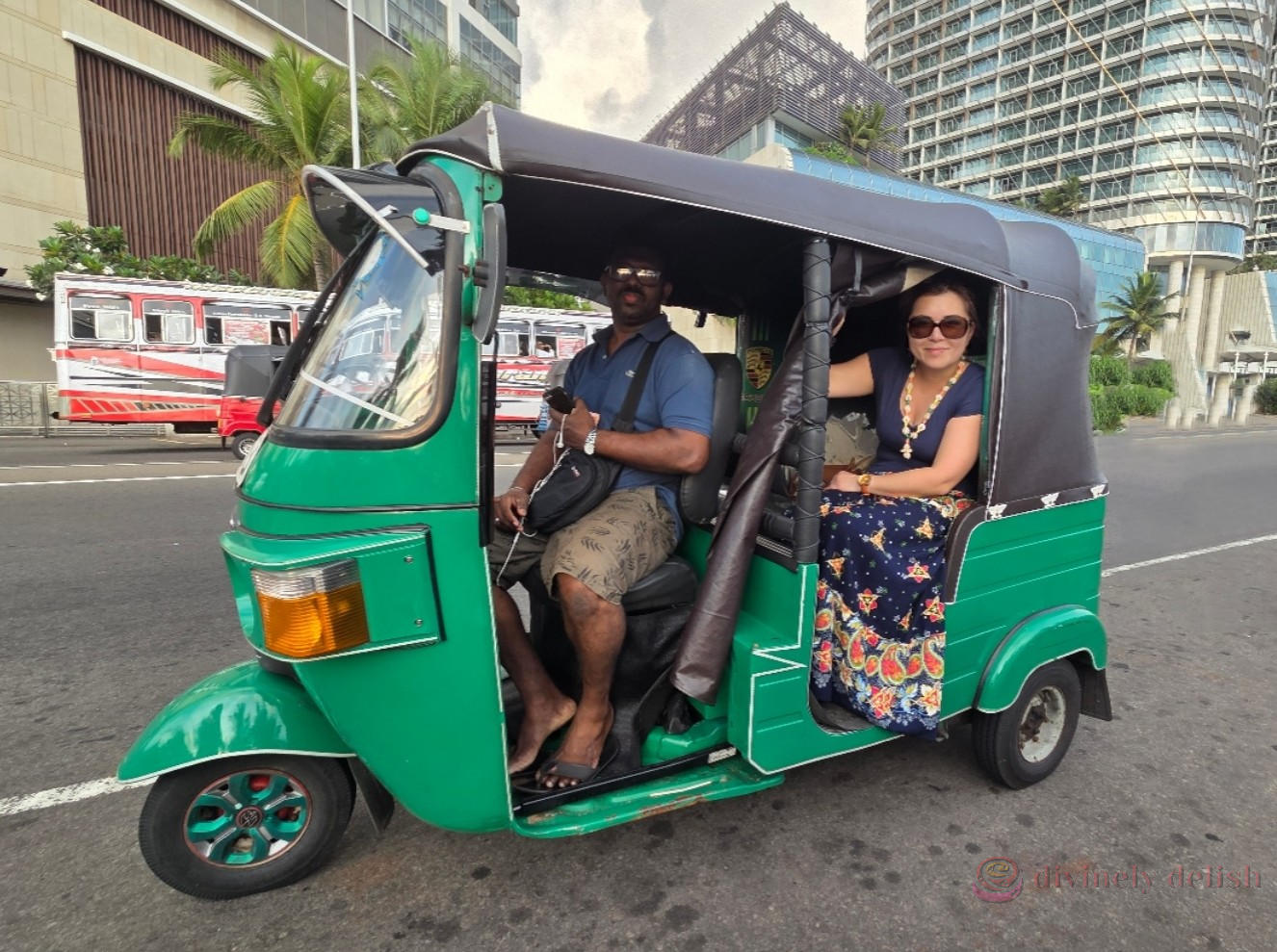
I went the private driver route instead, and for me it was the right call. This was my first time hiring a driver for an entire trip, and it turned out to be such a comfortable and convenient way to travel. It definitely costs more than public transport, though still not as pricey as I initially expected. My driver, Sajan, was booked through Digital Tourism (you can now book directly with Sajan at https://srilankanspringtours.com/) and cost US$106.25/day, not including tips. There were no extra charges as long as I stayed within the 850 km mileage limit. With my tight schedule and packed itinerary, it made sense to trade a little extra money for time and sanity. I liked that I was traveling independently rather than being herded around on a package tour, and still had full flexibility to adjust my plans on the go. The personalized experience was absolutely worth it.
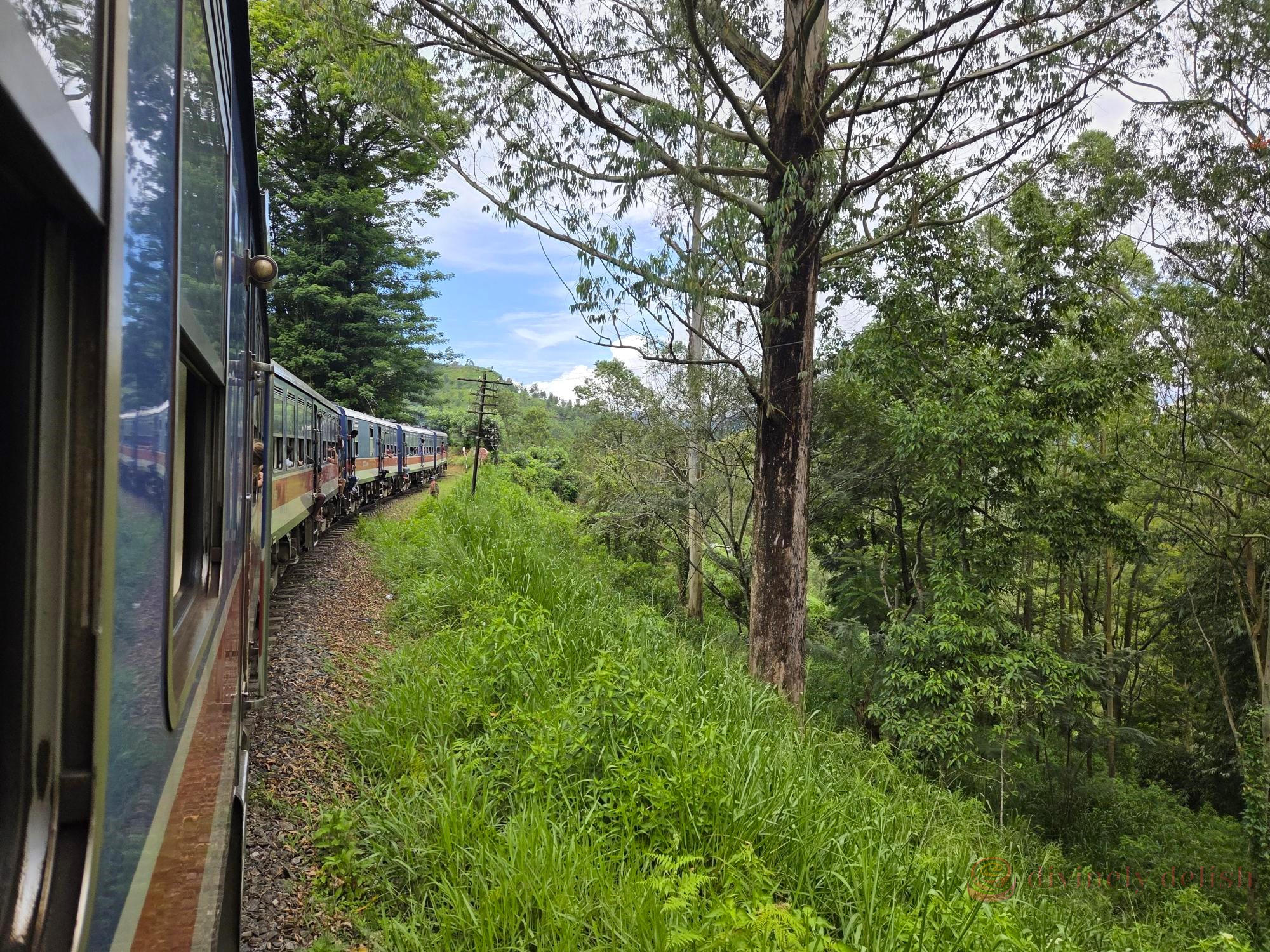
That said, trains are iconic in Sri Lanka and a fantastic budget-friendly option. The network doesn’t cover every corner of the country, but it does connect the major cities and many popular destinations. Even if you rely on a car or tuk tuk for most of your trip, you cannot skip taking the train between Kandy and Ella. (or at the very least, ride part of the way, as I did). It definitely lives up to its reputation as one of the most scenic train journeys in the world.
Itinerary
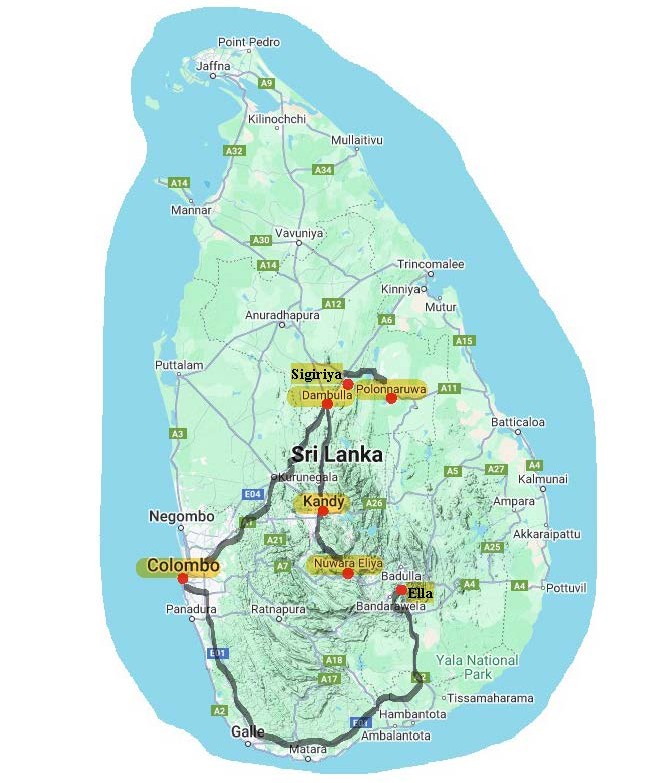
For reasons I don’t understand, most tourists seem to travel Sri Lanka in a clockwise loop. That means taking the train from Kandy to Ella. While researching, I stumbled across a few travel blogs that mentioned the train is far less crowded going the opposite direction, from Ella to Kandy. That sounded like a win to me, so I planned my trip counter-clockwise instead, starting and ending in Colombo.
Colombo to Ella
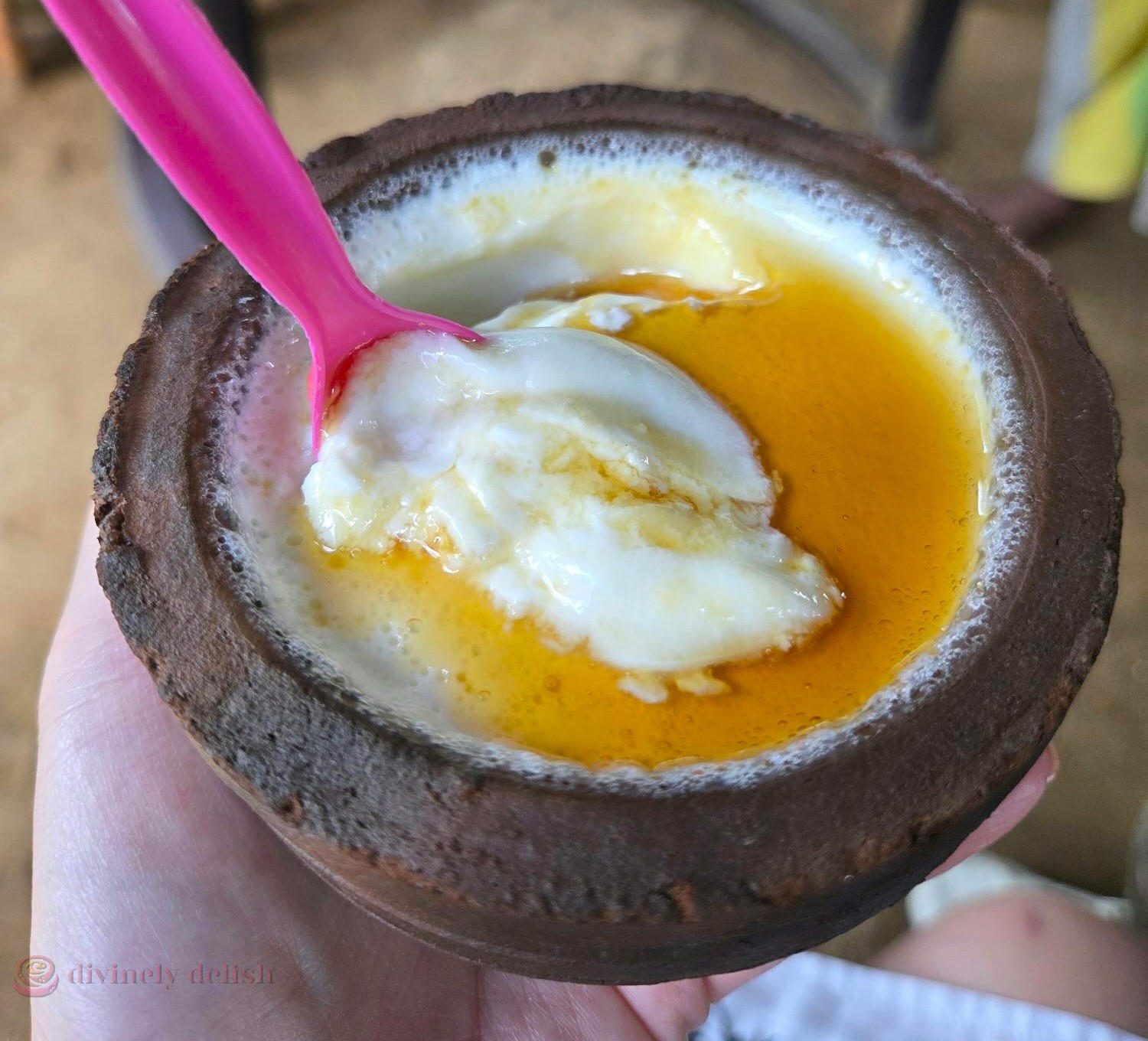
My driver, Sajan, picked me up from the legendary Mount Lavinia Hotel, a former colonial mansion set on Lavinia Beach, just south of Colombo. We took the Southern Expressway to Mattala, then turned north towards the hill country. Along the way, we stopped at a roadside stall for kiripani (buffalo curd with treacle). Even though it was raining heavily, I insisted on visiting Buduruwagala (US$3 entrance fee) site of an ancient Mahayana Buddhist temple complex featuring seven rock-cut figures, including a towering Buddha statue that stands 15 metres high, the tallest of its kind in the country. After lunch in Wellawaya, we continued on to Ravana Ella Waterfall, a cascading 25-metre-high fall that’s also one of the widest in Sri Lanka.
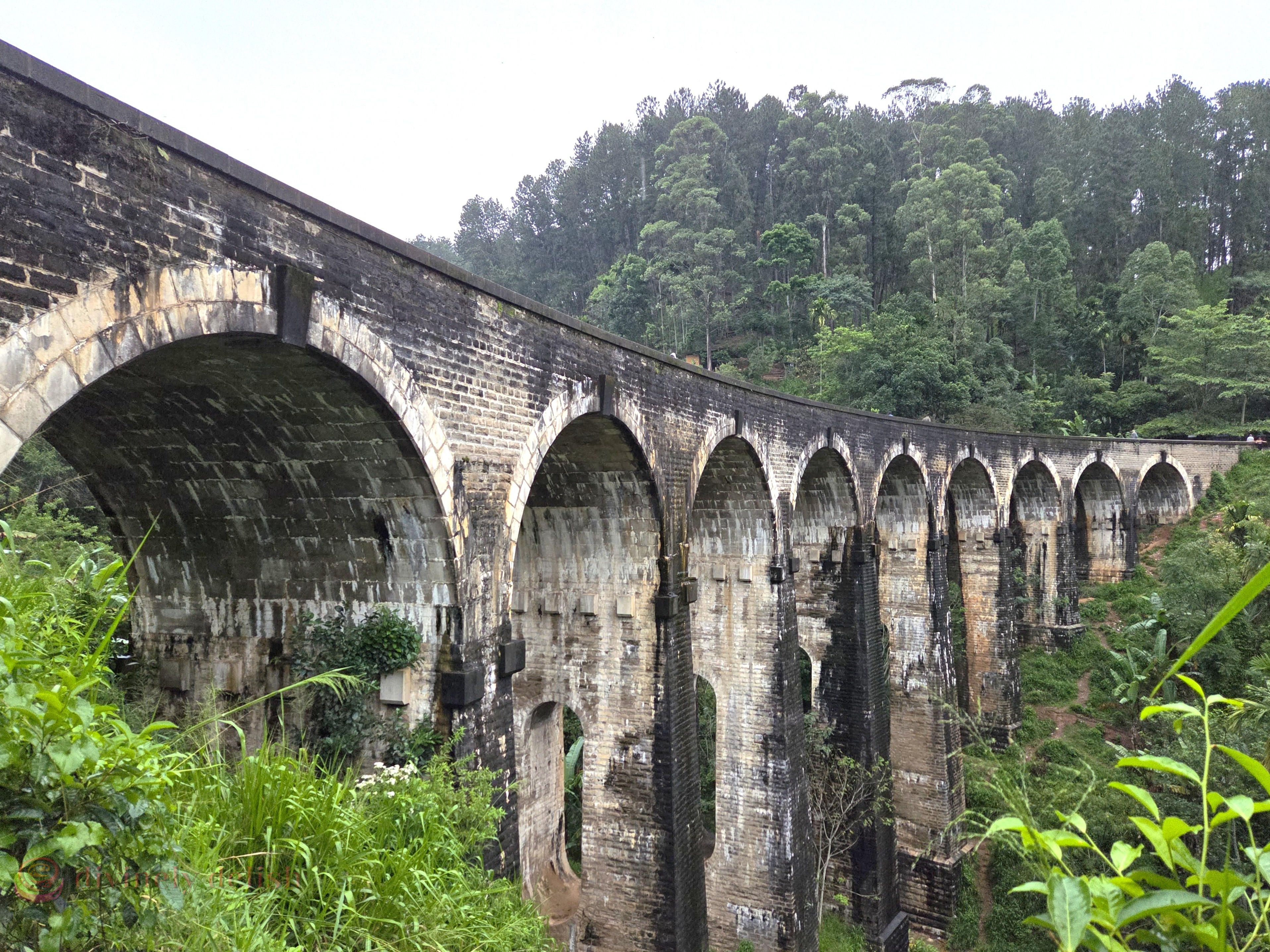
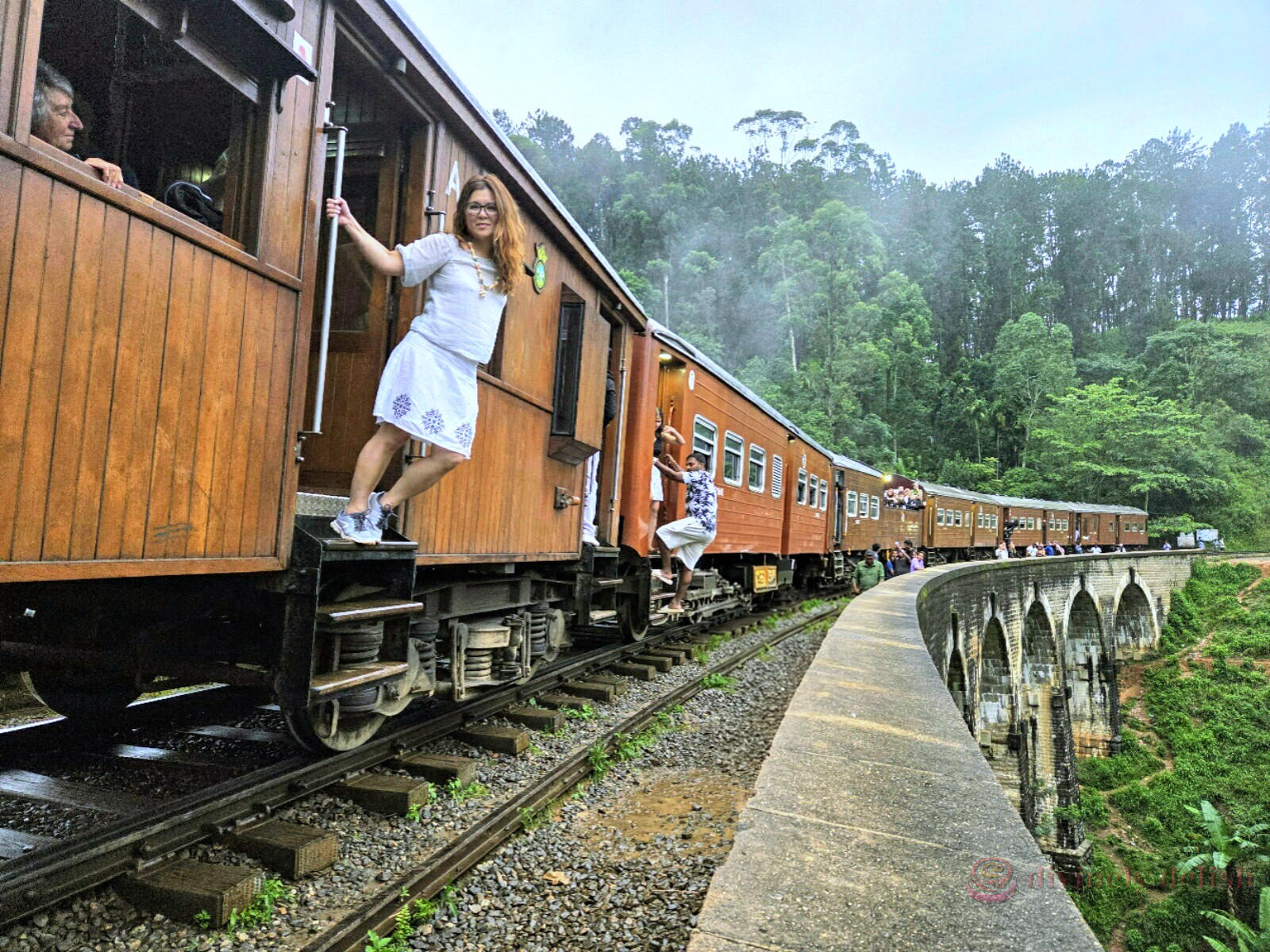
When we finally arrived in Ella, we made a beeline for—where else—but the famous Nine Arches Bridge between Ella and Demodara. Our timing could not have been better. I was taking videos of the lush surroundings when a train suddenly rolled onto the bridge and came to a full stop. Passengers spilled out for photos, as the rest of us onlookers collectively dashed toward the train, determined not to miss our chance at getting the iconic ‘hanging off the train’ shot!
I raced along the tracks toward an open train door—only to realize the lower step was much higher than I’d anticipated. I couldn’t even hoist myself up from the tracks, but I was determined not to miss this photo op! Thankfully, Sajan—already holding my bag and phone—lifted me just high enough to get a foothold, while a kind passenger on board reached out and helped haul me up. Sajan hurriedly snapped a bunch of photos of me hanging off the side of the train. The craziest part? After I got down, I decided to repeat the whole manoeuvre a second time, just to make sure he got the perfect shot! It was drizzling the entire time and I was getting soaked—but I couldn’t have been happier!
Ella to Nuwara Eliya
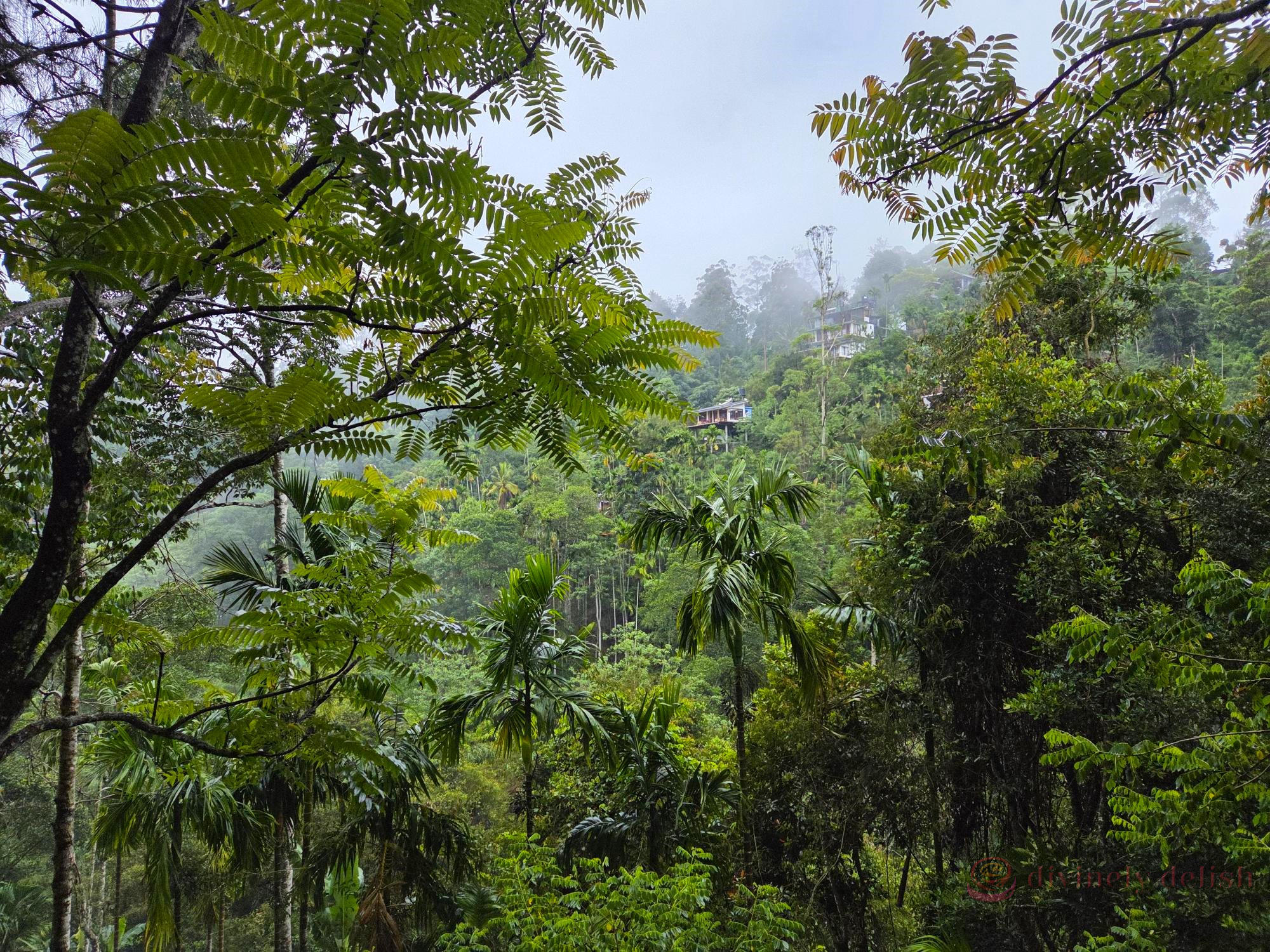
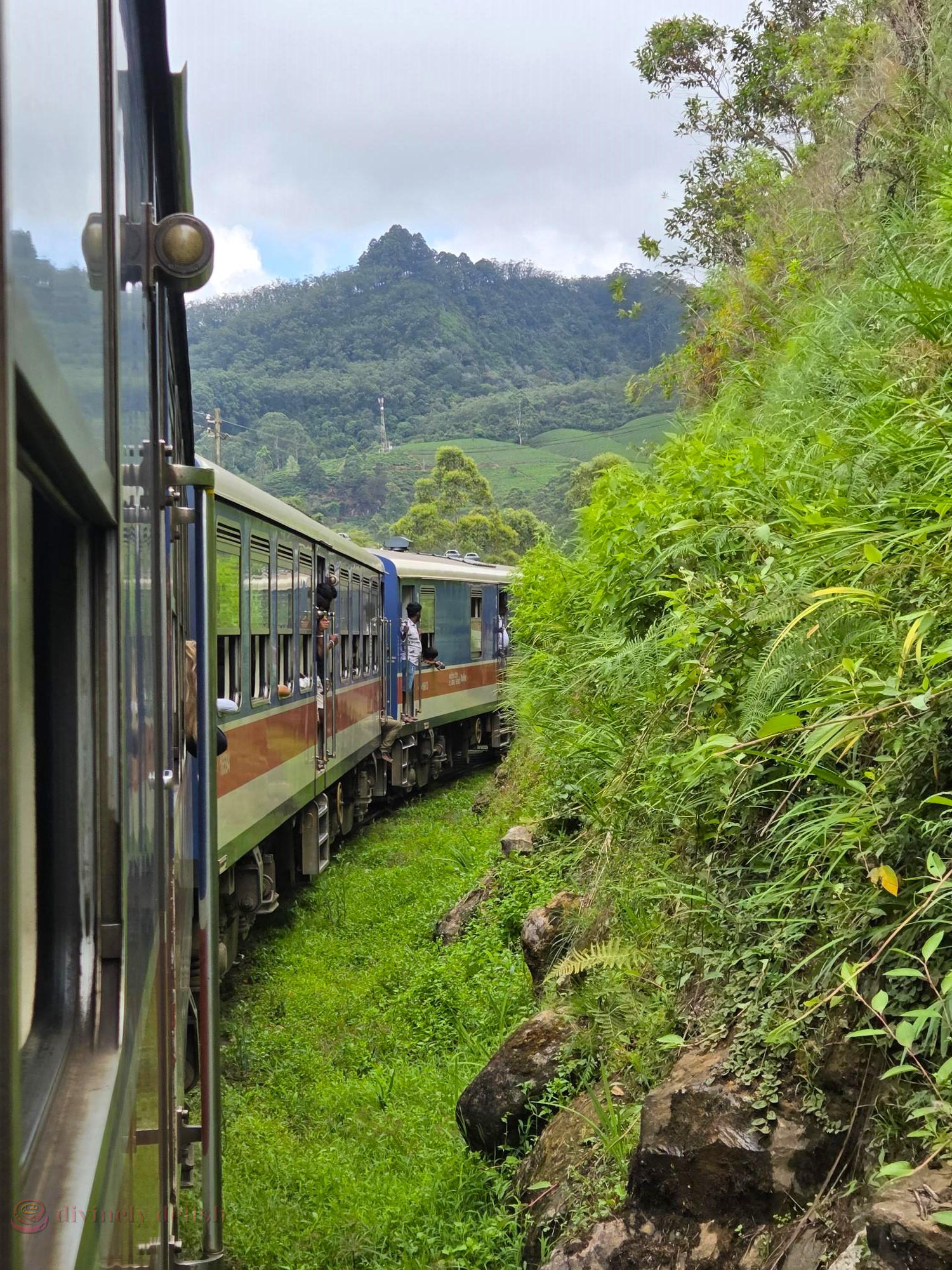
If you do nothing else in Sri Lanka, you simply have to take the train! I hopped on the iconic Podi Menike from Ella to Nuwara Eliya (Nanu Oya). The journey took about three hours, moving slowly through some of the most breathtaking scenery you can imagine—rolling hills blanketed in tea plantations, misty valleys, and distant waterfalls. It’s no wonder this route is considered one of the world’s most beautiful train rides. It was definitely a highlight of my trip.
I bought my e-ticket via Viator through a link on Tripadvisor. It cost C$26.37 (US$18.50) for a second class reserved seat (this is the class you want to get, which allows you to lean out of open windows and doorways for the best views and photos). I suggest buying the ticket early, as it can sell out quickly. Most sources online say you can purchase tickets 30 days before travel, but I was actually able to buy my ticket 5 weeks in advance.
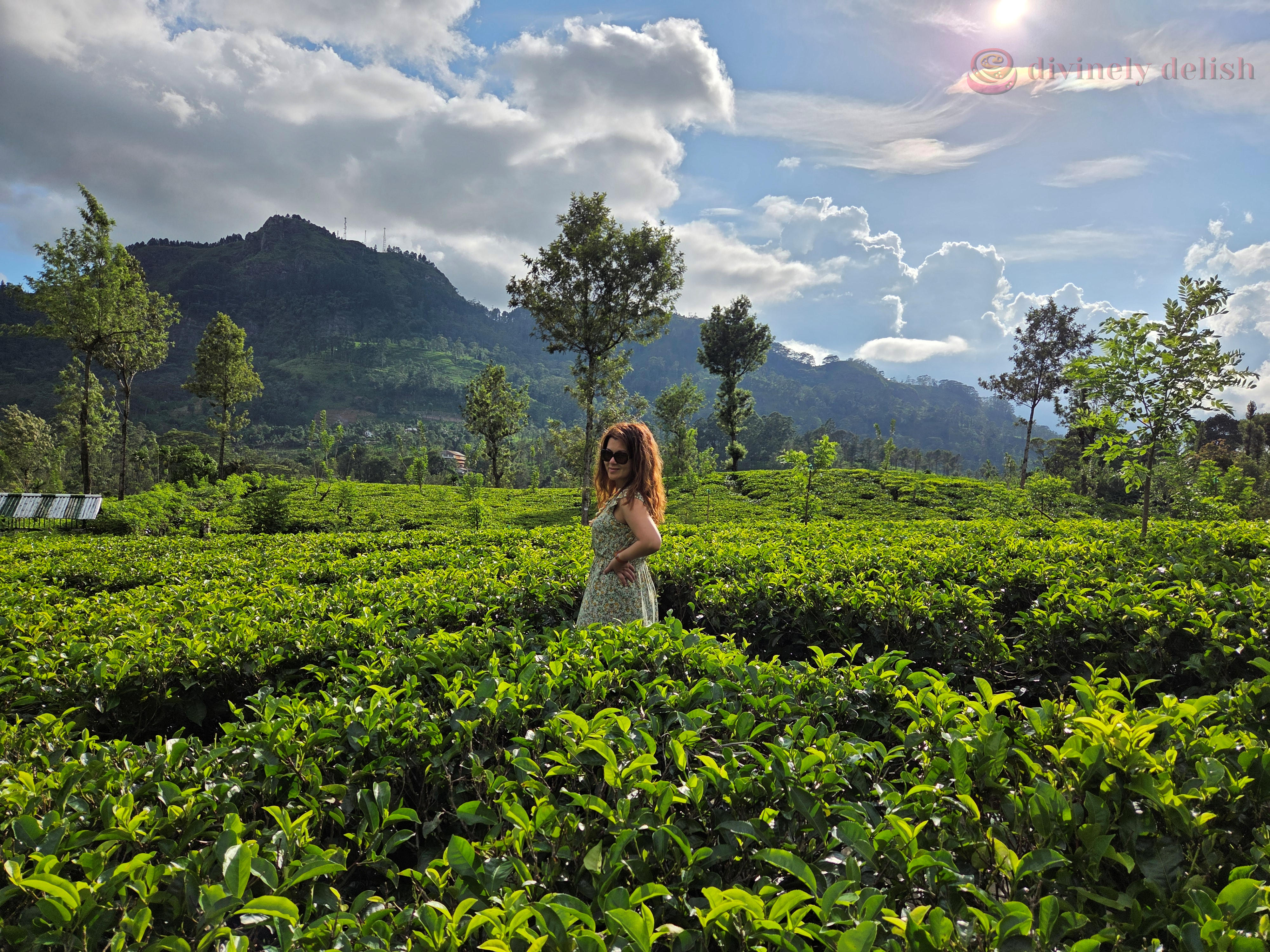
Sajan met me at the Nanu Oya station, the nearest train station for Nuwara Eliya, which is 8 km away. After a leisurely lunch in Nuwara Eliya, we made a brief stop at Ramboda Falls, one of the region’s scenic highlights. Being in the heart of tea country, a visit to a tea estate was an absolute must, so we ventured to Rothschild Tea Estate. Unfortunately, it was closed for Labour Day on May 1, but one of the workers kindly offered me a personal tour, explaining the process of tea production from harvest to finished product. I got to sample a couple of teas of my choice and spent some time sipping them on the veranda, soaking in the lush, vibrant greenery that stretched out before me.
Kandy
Next, we made our way to Kandy, located in the heart of the island. As the last royal capital of the ancient Sinhalese kingdoms, Kandy carries immense historical significance. It is also home to the Temple of the Tooth Relic, (Sri Dalada Maligawa) a UNESCO World Heritage site and one of the most sacred places of worship for Buddhists.
From the drive around the city, Kandy struck me as charming, nestled beside a serene lake, and I wished I had more time to explore. We arrived at the the Temple of the Tooth Relic (2000 LKR entrance fee) in the evening during the Pooja ceremony, a daily ritual filled with drumming and chanting. It was packed with devotees, many carrying trays of flowers and food items as offerings. We joined a long queue of tourists and locals, waiting for our turn to glimpse the golden casket that houses the sacred tooth.
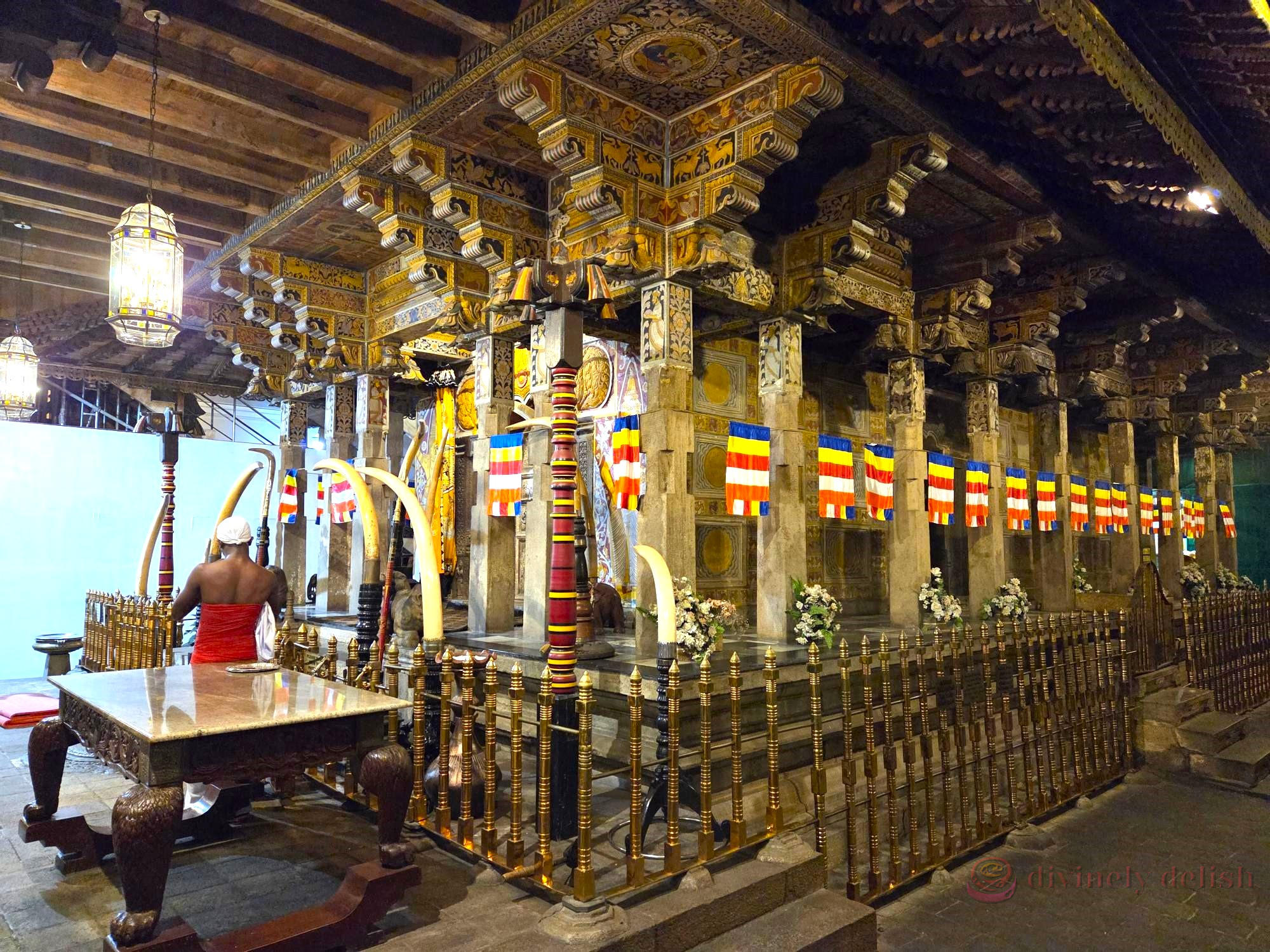
Visitors don’t actually see the tooth itself, so after standing and waiting in the hot and crowded temple, the fleeting view of the casket was admittedly anticlimactic. Still, the experience was unforgettable, letting me absorb the vibrant energy and reverence of the ceremony.
Sigiriya
Tourists flock to Sigiriya to climb Lion Rock, a massive granite pillar rising dramatically above the surrounding plateau, crowned with the ruins of a fortified fortress. Like many major tourist sites in Sri Lanka, it comes with a steep price tag—around US$30 to make the climb. Many visitors opt for the nearby Pidurangala Rock instead, which is much more affordable (500 LKR / US$5) and, from the photos I’ve seen, offers arguably even more impressive views, with Lion Rock towering majestically over the flatlands. Not surprisingly, it’s especially popular at sunrise.
I was, unfortunately, experiencing some discomfort in my hip at the time and decided not to attempt the climb at either site.😭 Seeing Lion Rock from ground level didn’t quite make up for my disappointment!
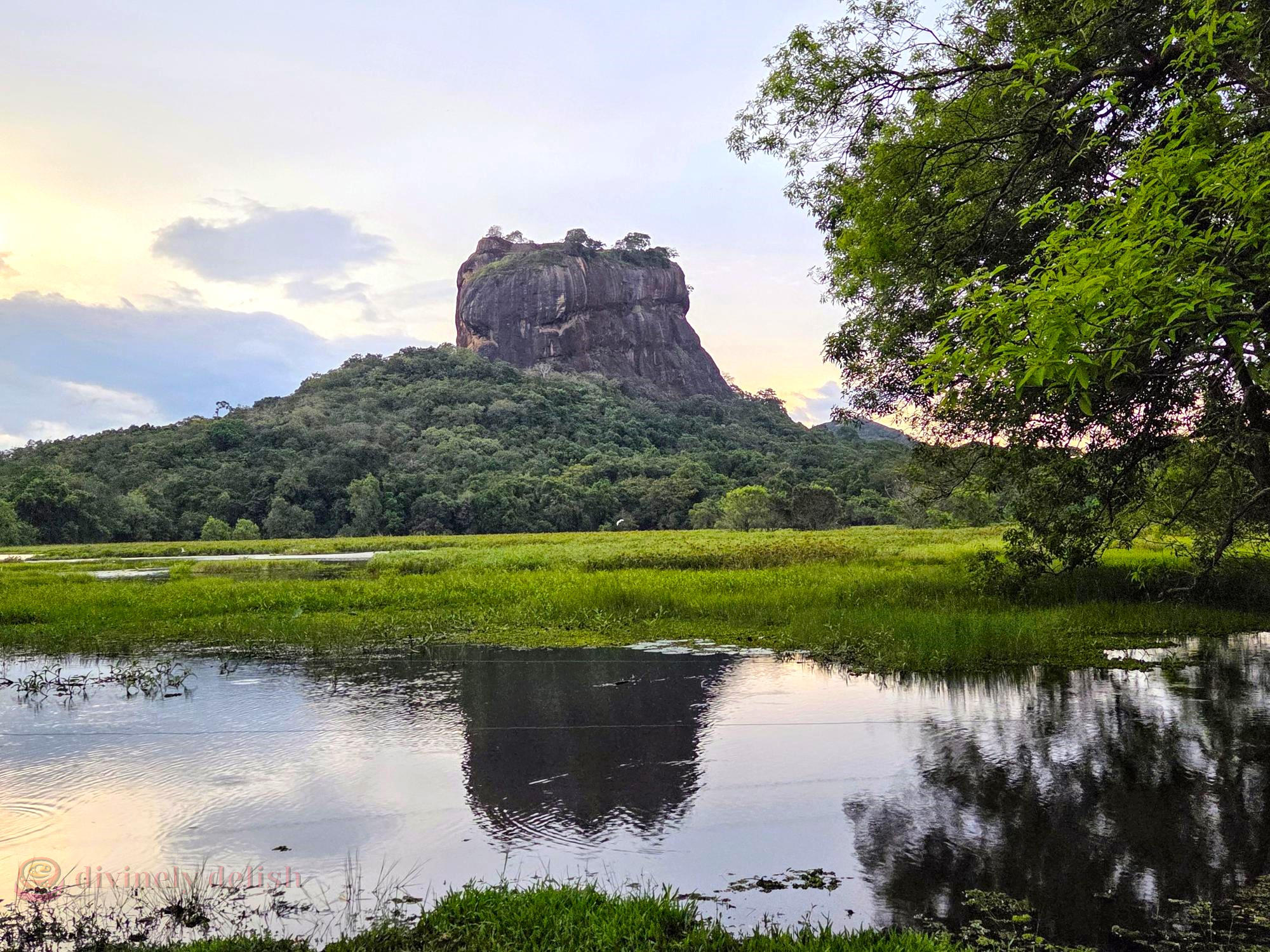
Sigiriya’s central location in the Cultural Triangle also makes it a convenient base for exploring other UNESCO World Heritage Sites, including Anuradhapura, Polonnaruwa, and Dambulla.
Polonnaruwa
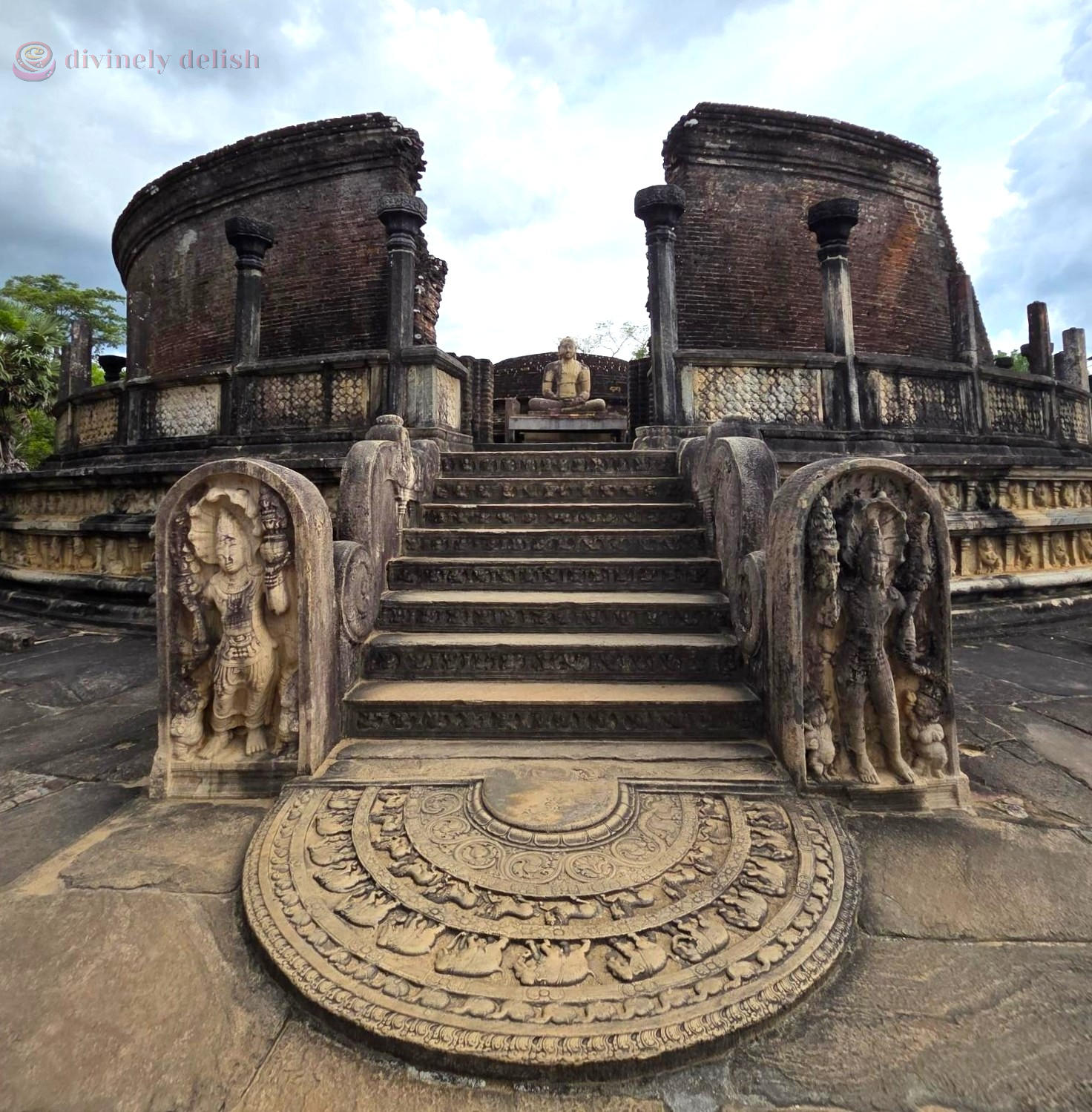
We took a day trip from Sigiriya to explore the Ancient City of Polonnaruwa, which became Sri Lanka’s second capital after the fall of Anuradhapura. Since I couldn’t visit both, I chose Polonnaruwa based on what I’d read: the ruins here are more complete, better preserved, and the intricate details are easier to appreciate. Once again, the entrance fee doesn’t come cheap—US$30. I spent several hours wandering among impressive temples, palaces, and monuments, with the highlight being Gal Vihara—a group of four massive rock-cut Buddha statues in different poses: sitting, reclining, and standing. The tallest reaches seven metres, and the longest stretches over fourteen!
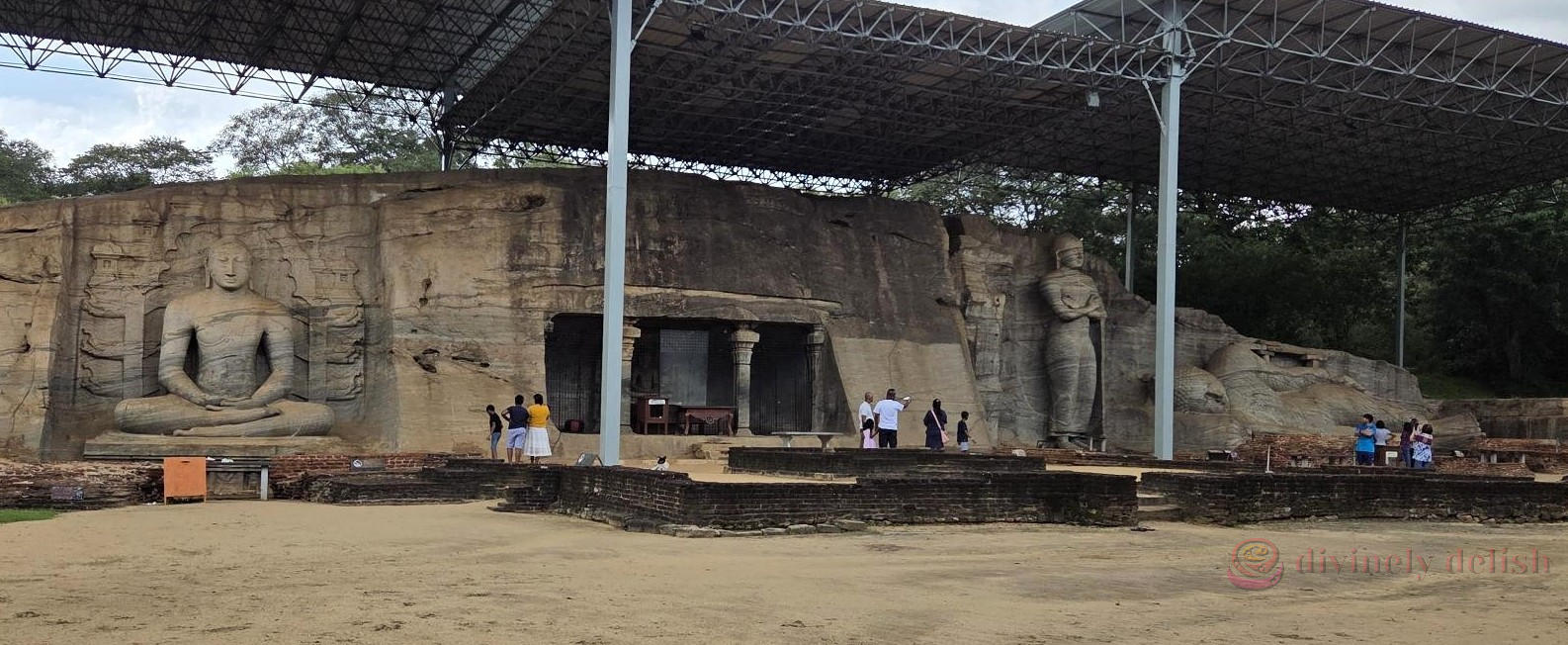
Be warned, it can get extremely hot wandering the grounds (it was at least 40°C when I visited). Certain areas require you to remove your shoes before stepping onto the ruins, but don’t make the mistake I did and go barefoot. The rocks are scorching—seriously, burning-hot. If you’re wearing flip-flops, bring a pair of socks to protect your feet while exploring.
Dambulla
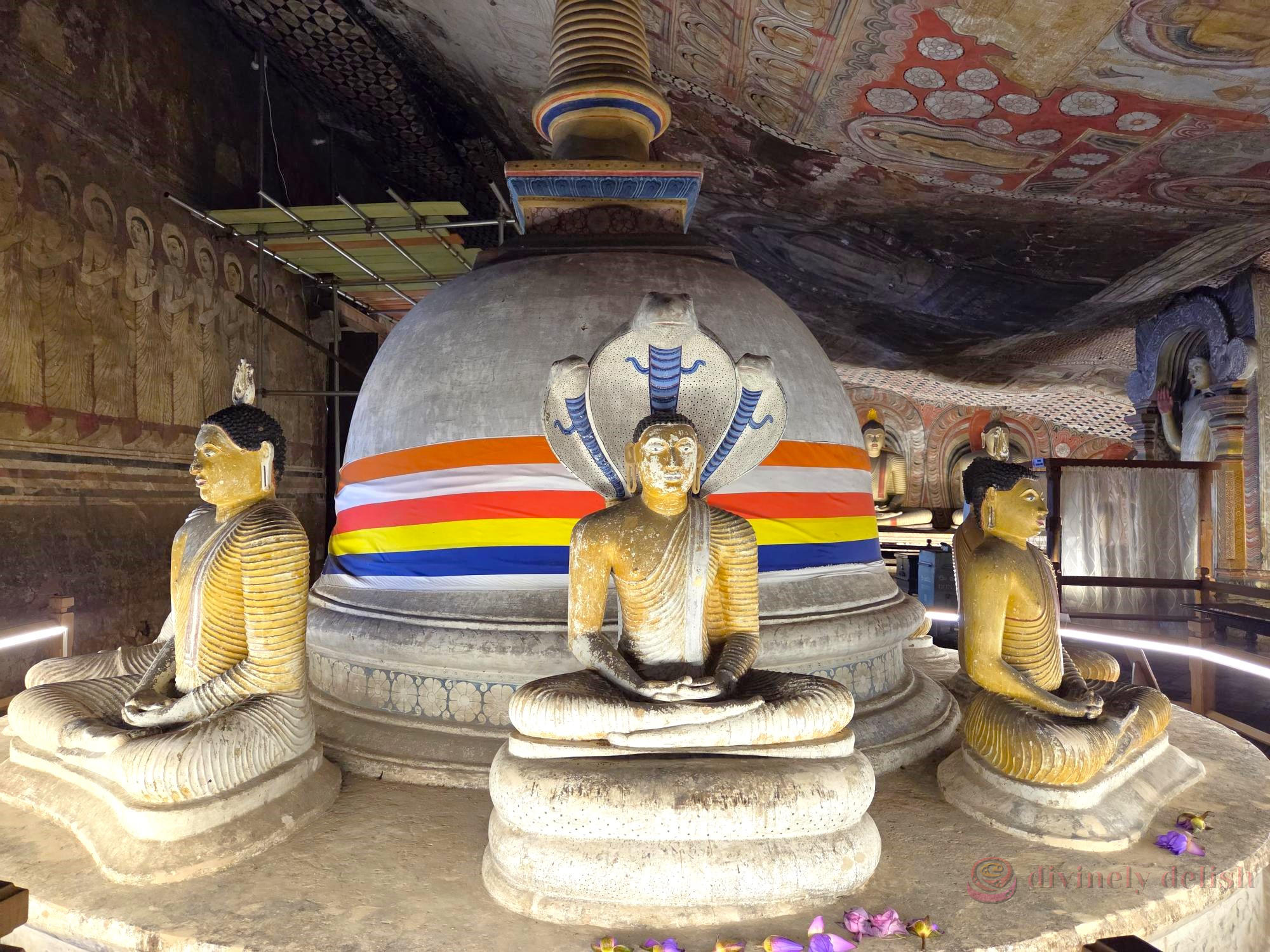
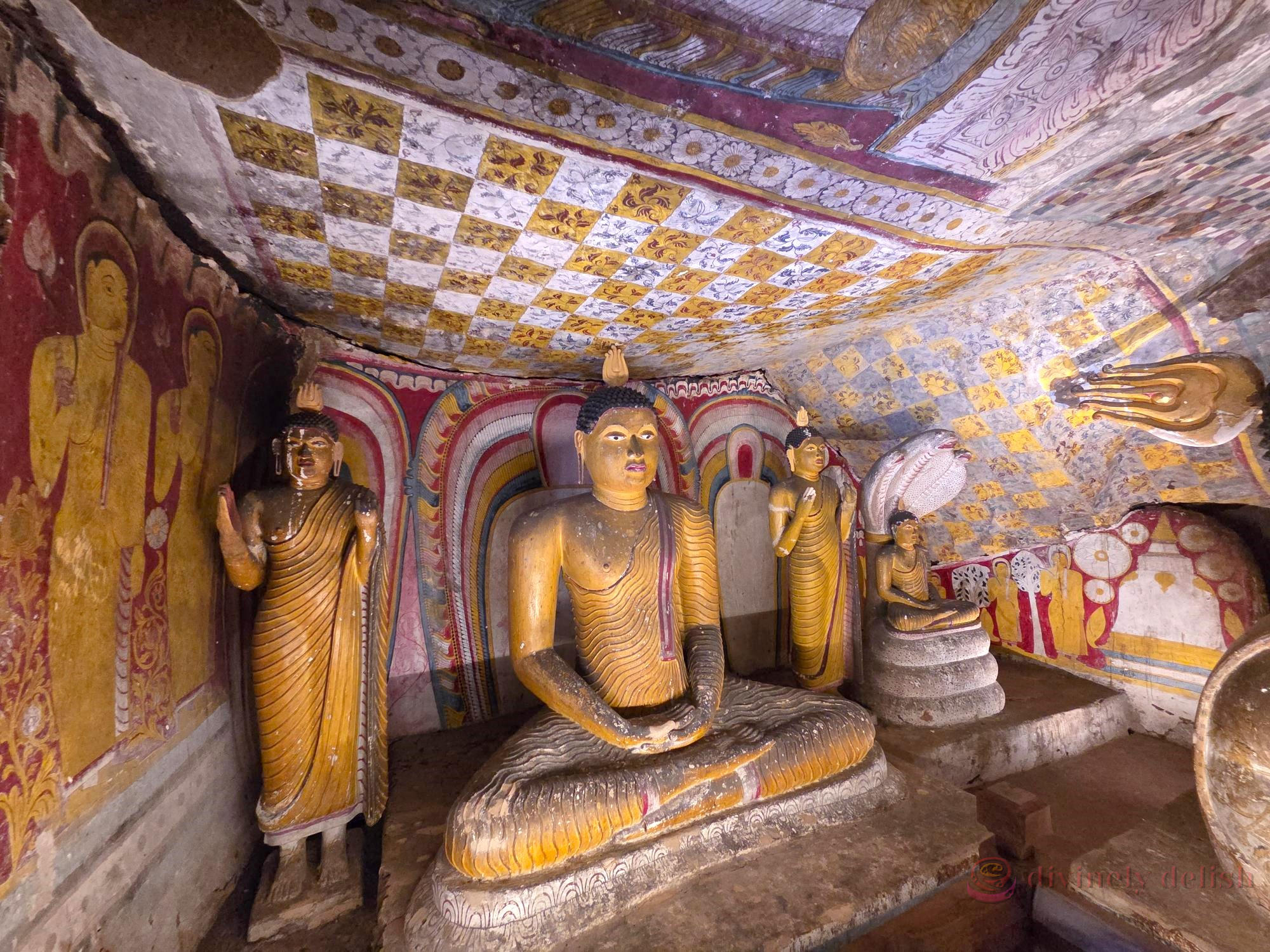
On the return to Colombo, we made a stop at the Dambulla Cave Temple (2000 LKR entrance fee) the largest and best-preserved cave temple complex in Sri Lanka. The site features five caves housing over 150 Buddha statues, figures of ancient kings, Hindu deities, and more than 2,100 square metres of murals. It was absolutely stunning—a definite must-see for anyone exploring the Cultural Triangle.
Colombo
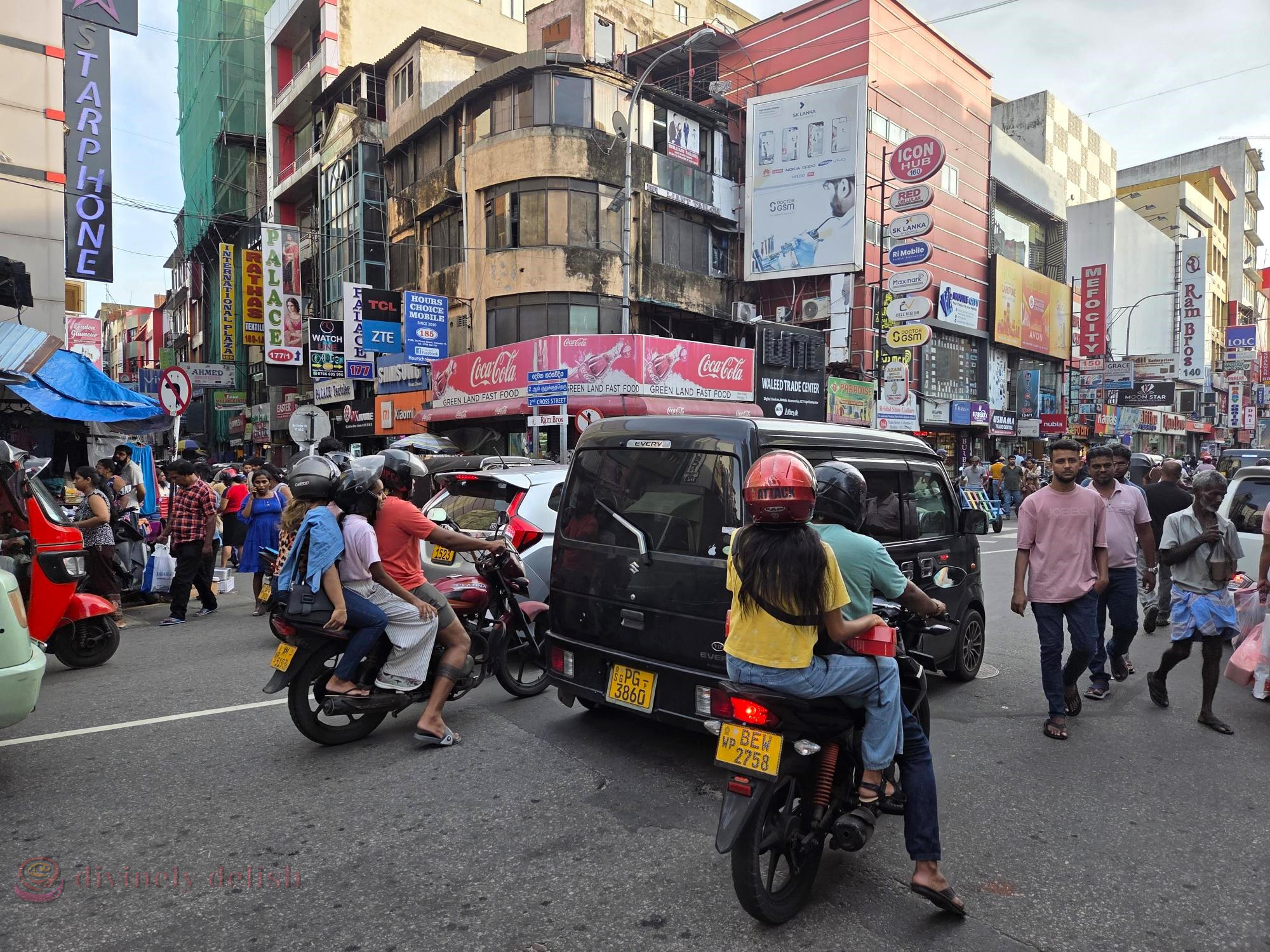
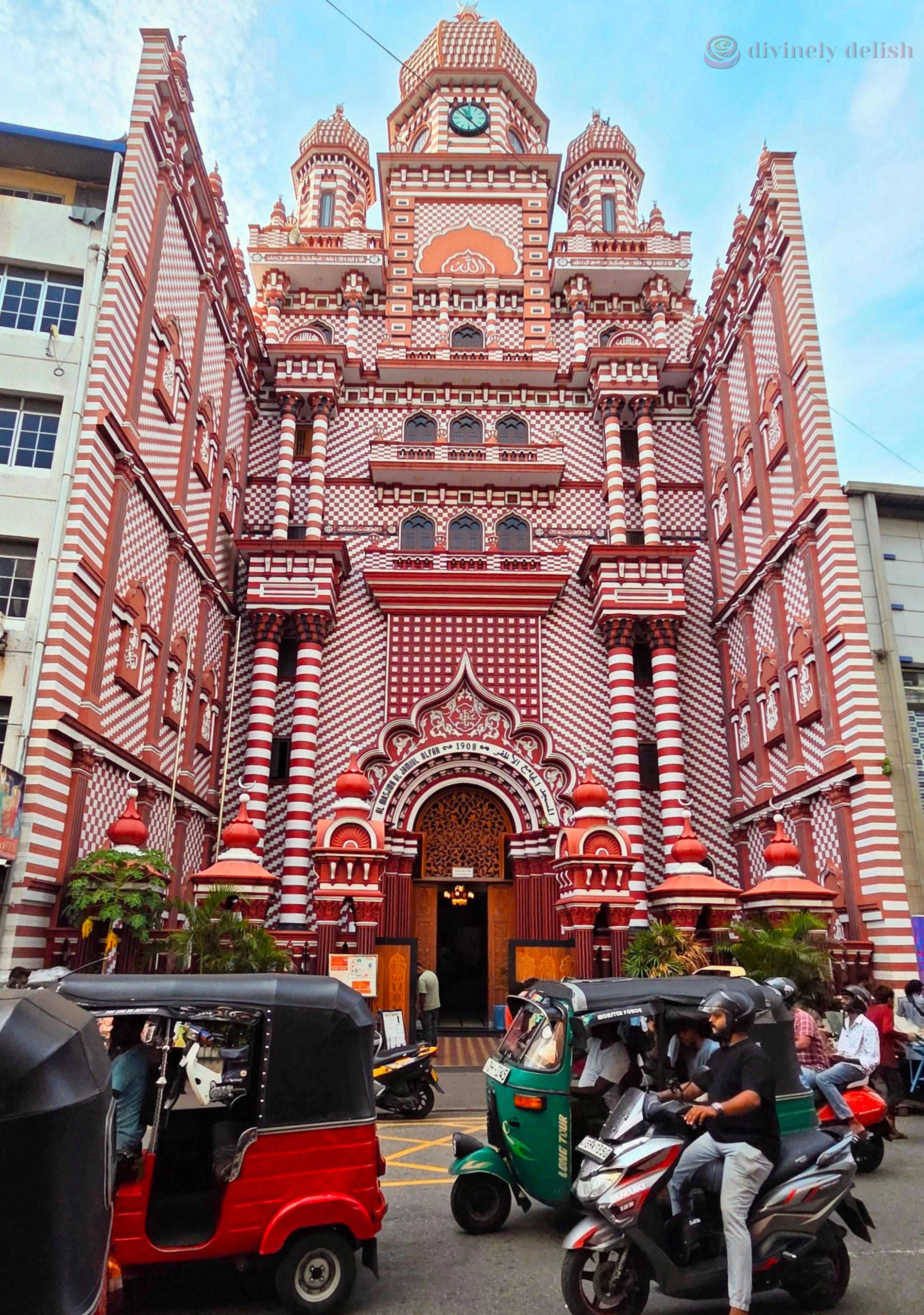
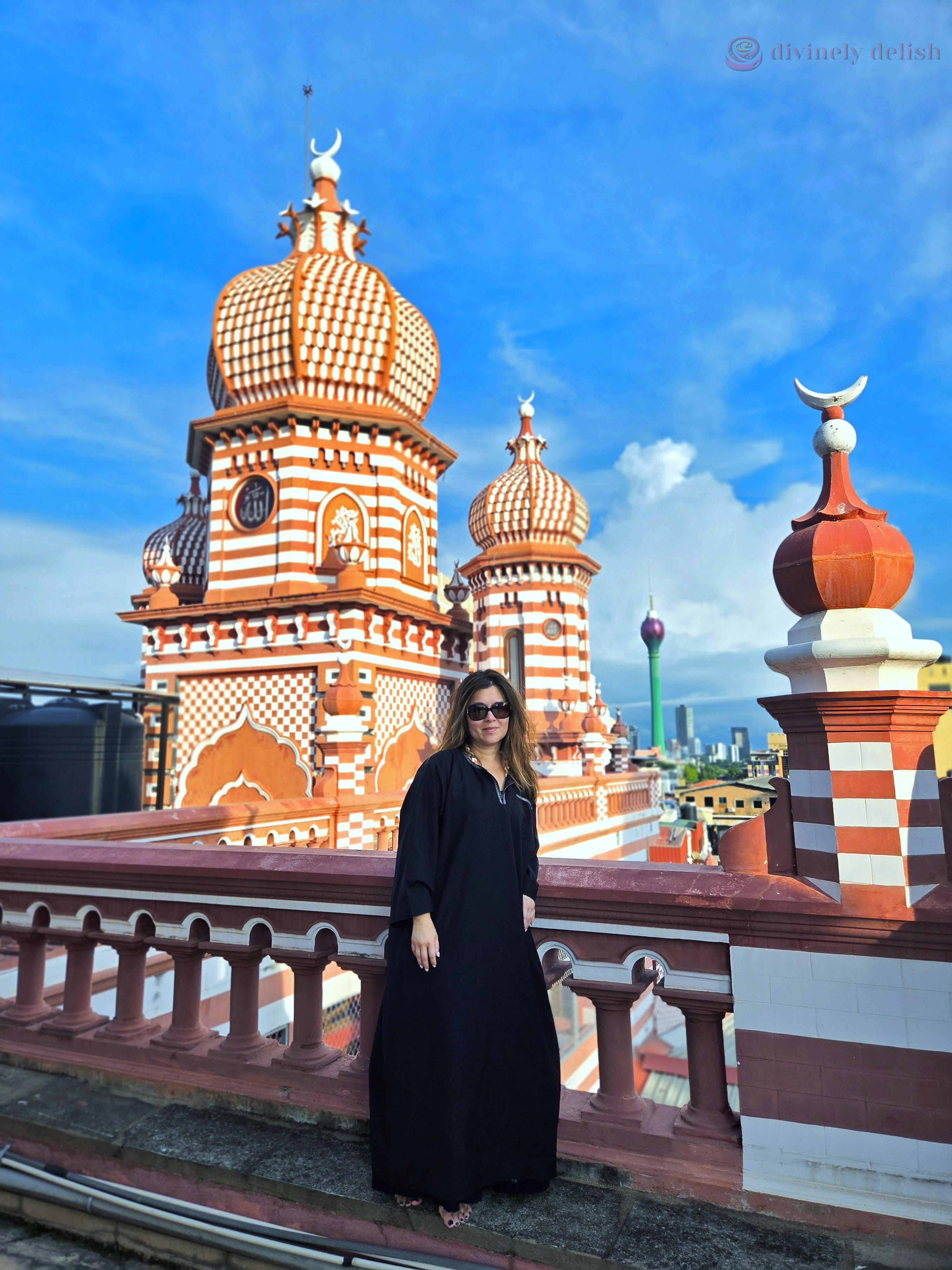
Back in Colombo, I went to Pettah Market, a bustling hub where vendors sell all kinds of inexpensive goods. It’s noisy and crowded but less chaotic compared to some markets in India! Amid the hustle and bustle stands the Jami Ul-Alfar Mosque, or Red Mosque, famous for its striking candy-striped exterior. Having seen countless photos, I was thrilled to finally experience its unique architecture in person. I joined a free guided tour, which I highly recommend—it allows you to go to the very top of the mosque where you can get up-close views of the minarets and look out over the city skyline. Cloaks are provided, although a few of us women ended up with ones without hoods. When I brought this to the guide’s attention, he just brushed it off and said it was fine to not cover our heads.
Independence Square is worth a visit for its historical significance. The Independence Memorial Hall was built to commemorate Sri Lanka’s independence from British rule in 1948 and offers a peaceful respite from the city’s bustle.
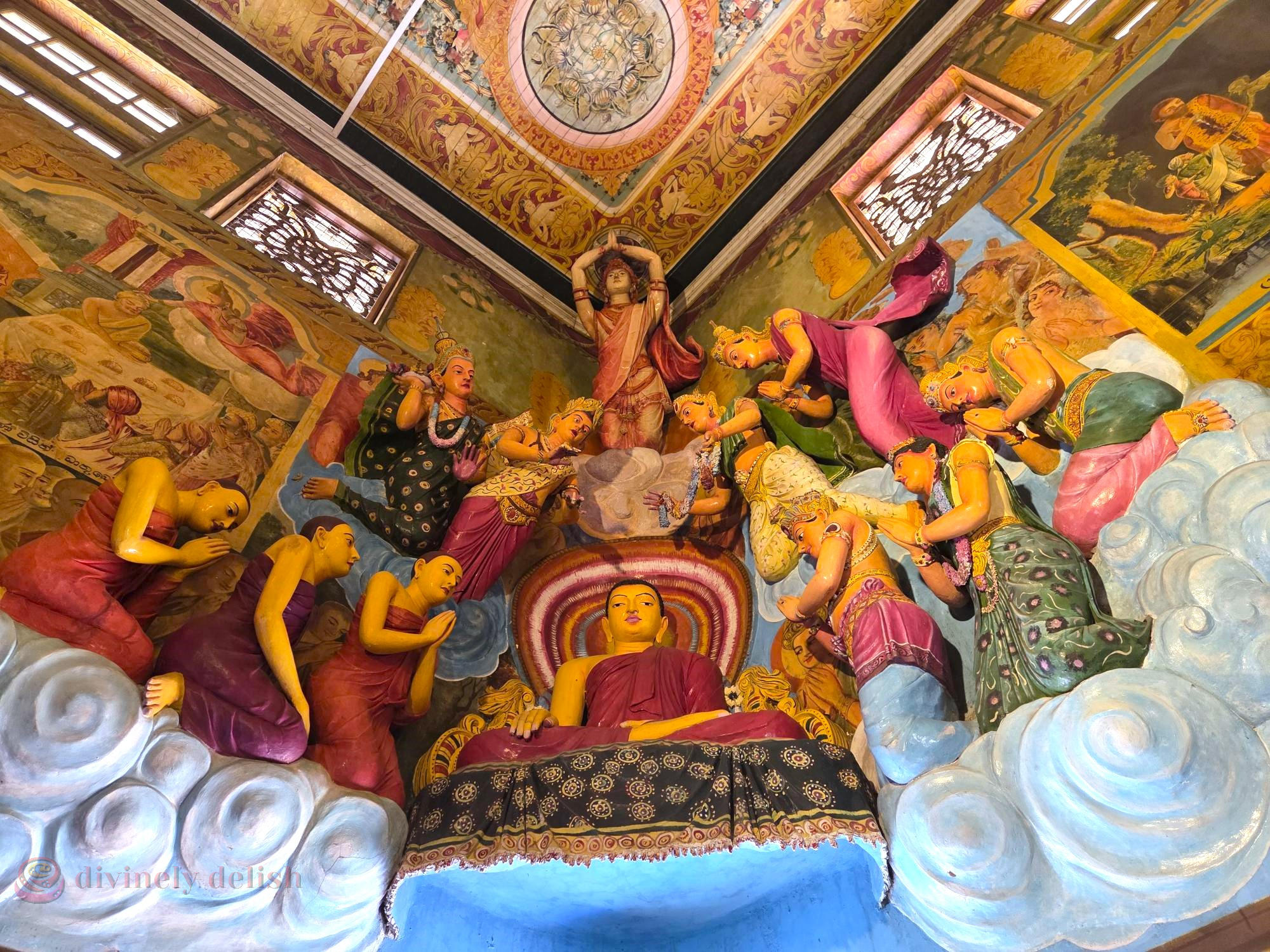
Gangaramaya Temple, one of Colombo’s oldest Buddhist temples, is truly unlike any other. Its architecture is an eclectic mix of Sri Lankan, Indian, Chinese, and Thai styles, blending traditional and modern elements. Statues of Hindu deities sit alongside Buddhist figures, and traditional religious sculptures share space with unexpected pop culture items, giving the temple a slightly fantastical—even bizarre—feel. The temple museums showcase gifts from devotees, including some delightfully quirky pieces. A tiny CN Tower snow globe—obviously a souvenir from Toronto—caught my eye because I happen to own the same one!
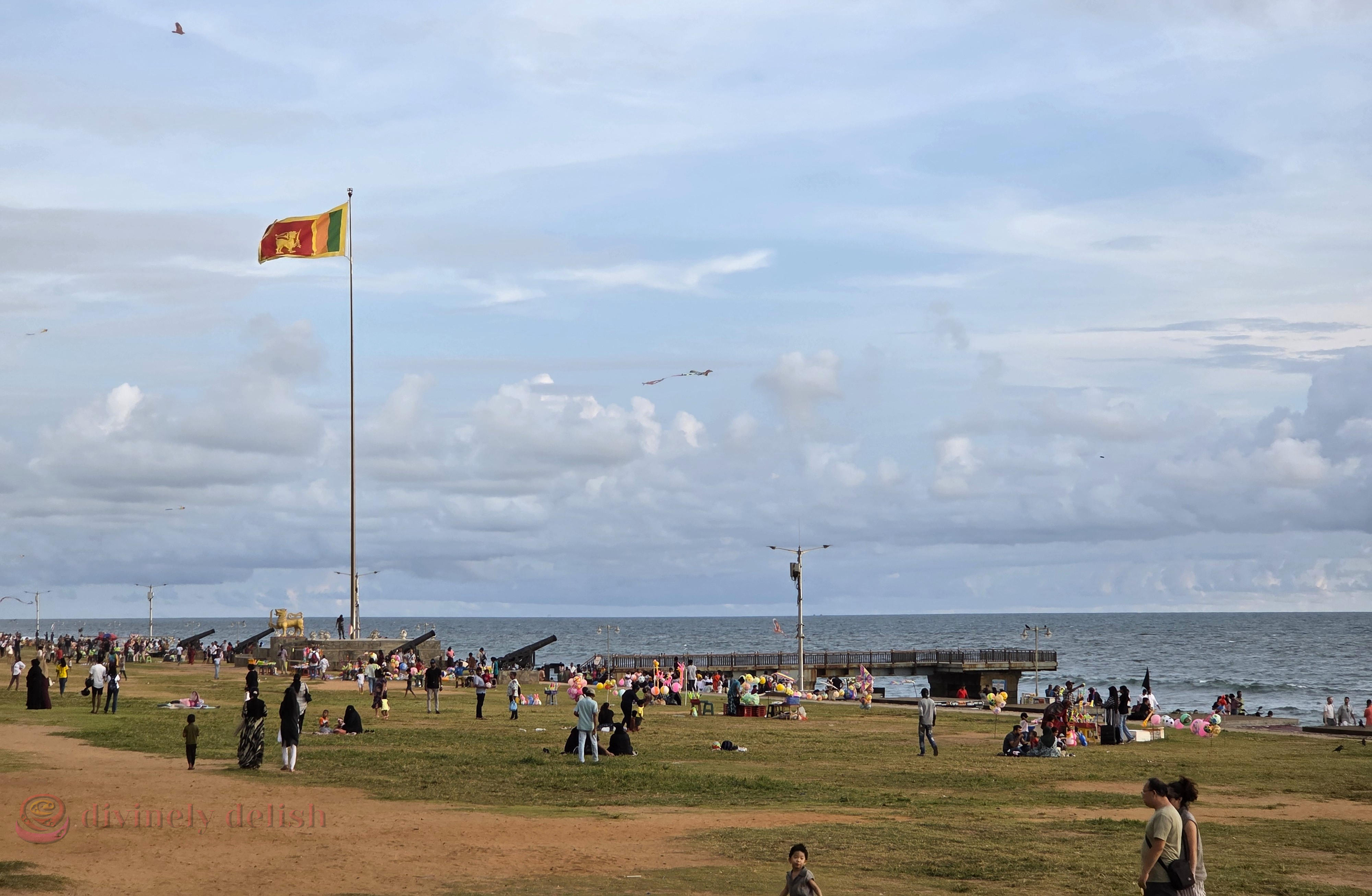
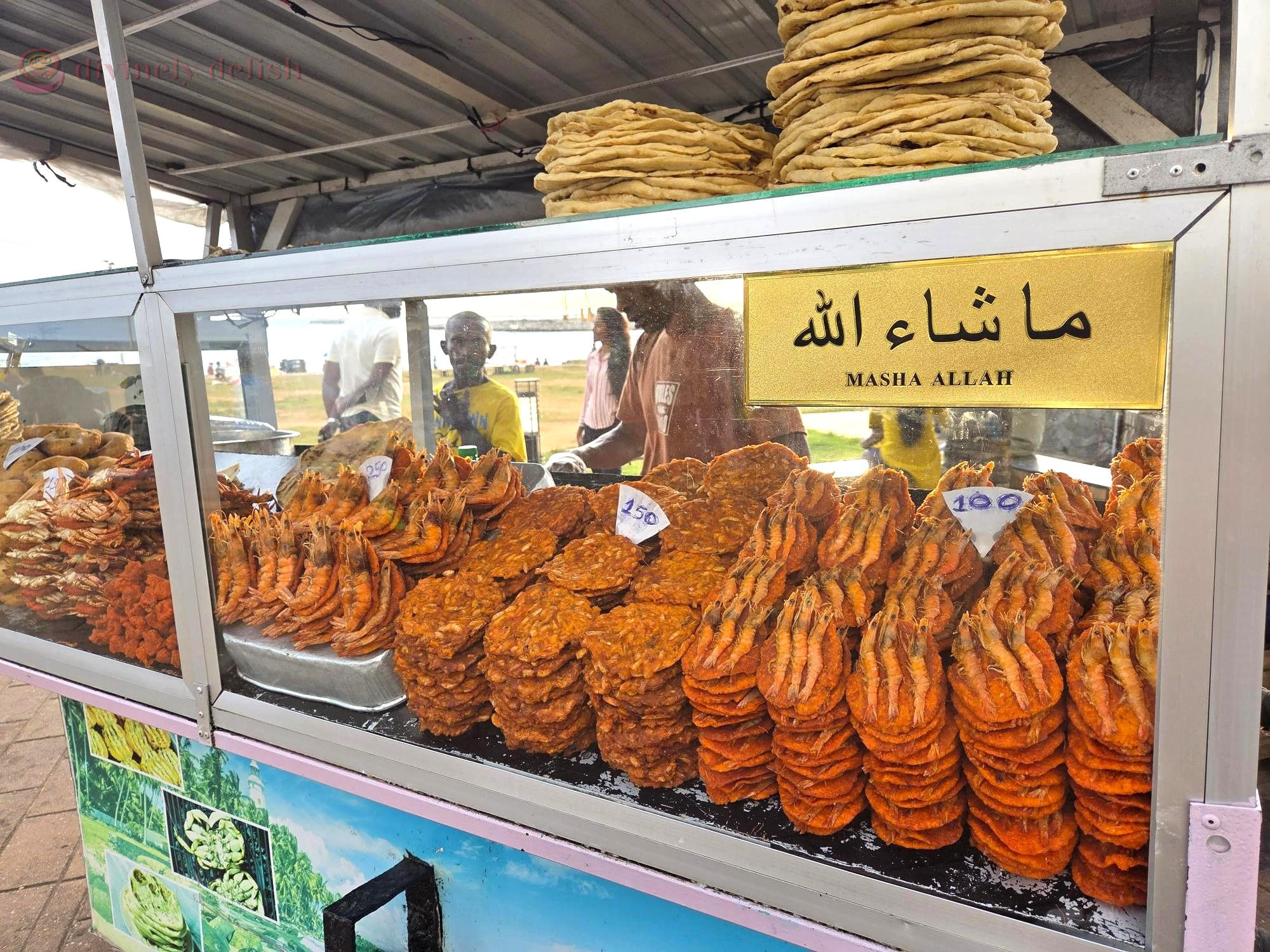
No trip to Colombo is complete without visiting Galle Face Green, a 500-metre-long, five-hectare ocean-side urban park just south of the Fort district. It’s a popular gathering spot for locals, where you’ll see youngsters flying kites and families enjoying picnics and the beach breeze. Here, you’ll find food vendor carts selling popular street foods such as deep-fried crabs, isso vade (lentil fritters topped with prawns) and kottu roti (shredded roti stir fried with vegetables and meat or seafood).
Food
Although I wouldn’t necessarily recommend staying at the Mount Lavinia Hotel (more on that later), their breakfast buffet was a delightful way to start the day. It was my first meal in the country and a tasty introduction to Sri Lankan cuisine. The spread included a wide variety of local dishes: idiyappam (string hoppers), appam (hoppers), kiribath (coconut milk-infused rice cakes), and an array of curries and sambols.
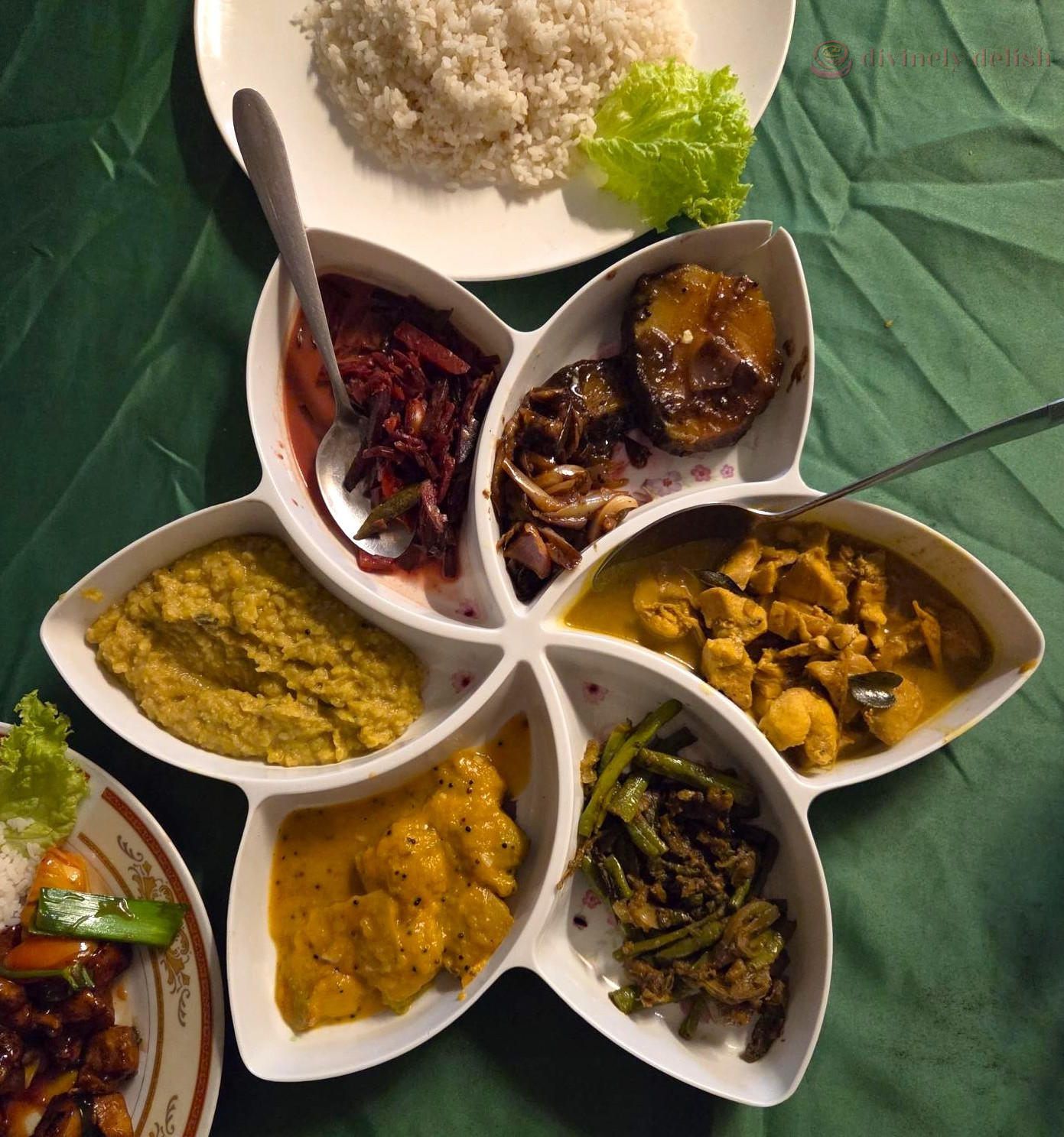
Rice and curry, Sri Lanka’s national dish, is a must-try. A plate of rice served with several meat and vegetable curries can be found almost everywhere, from casual eateries to high-end restaurants. For lighter bites or a quick snack, “short eats” are perfect: sweet or savoury snacks sold in bakeries and local food outlets.
And if you’re travelling along the south coast, don’t miss kiripani—buffalo curd drizzled with kithul, a sweet treacle made from the fishtail palm. It’s the island’s answer to yogurt and honey, and it’s a refreshing snack/dessert on a hot day!
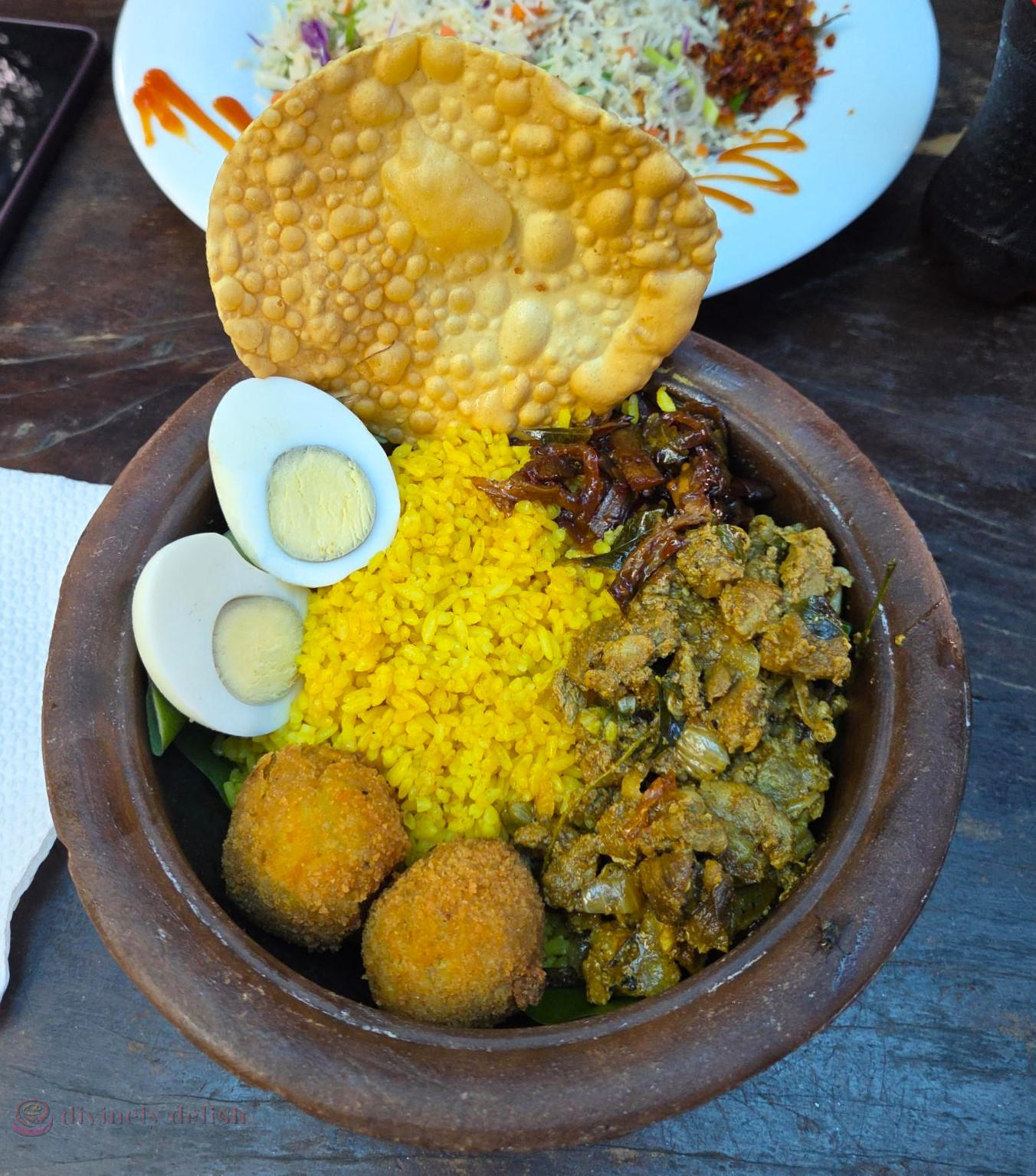
There were a few dishes I didn’t get to try, like polos (jackfruit) curry or black pork (or chicken) curry. I had seen an Instagram reel about lamprais—a traditional banana leaf-wrapped rice dish that looked too tasty to pass up. The version I had, however, was a modern, deconstructed take served in a bowl, but was still amazingly delicious.
Drinks are part of the experience too. I sampled Lion lager, ginger beer, and Sri Lanka’s national spirit, arrack, made from toddy, the fermented sap of the coconut flower. Arrack was a revelation—I regret I didn’t buy a bottle to bring home!
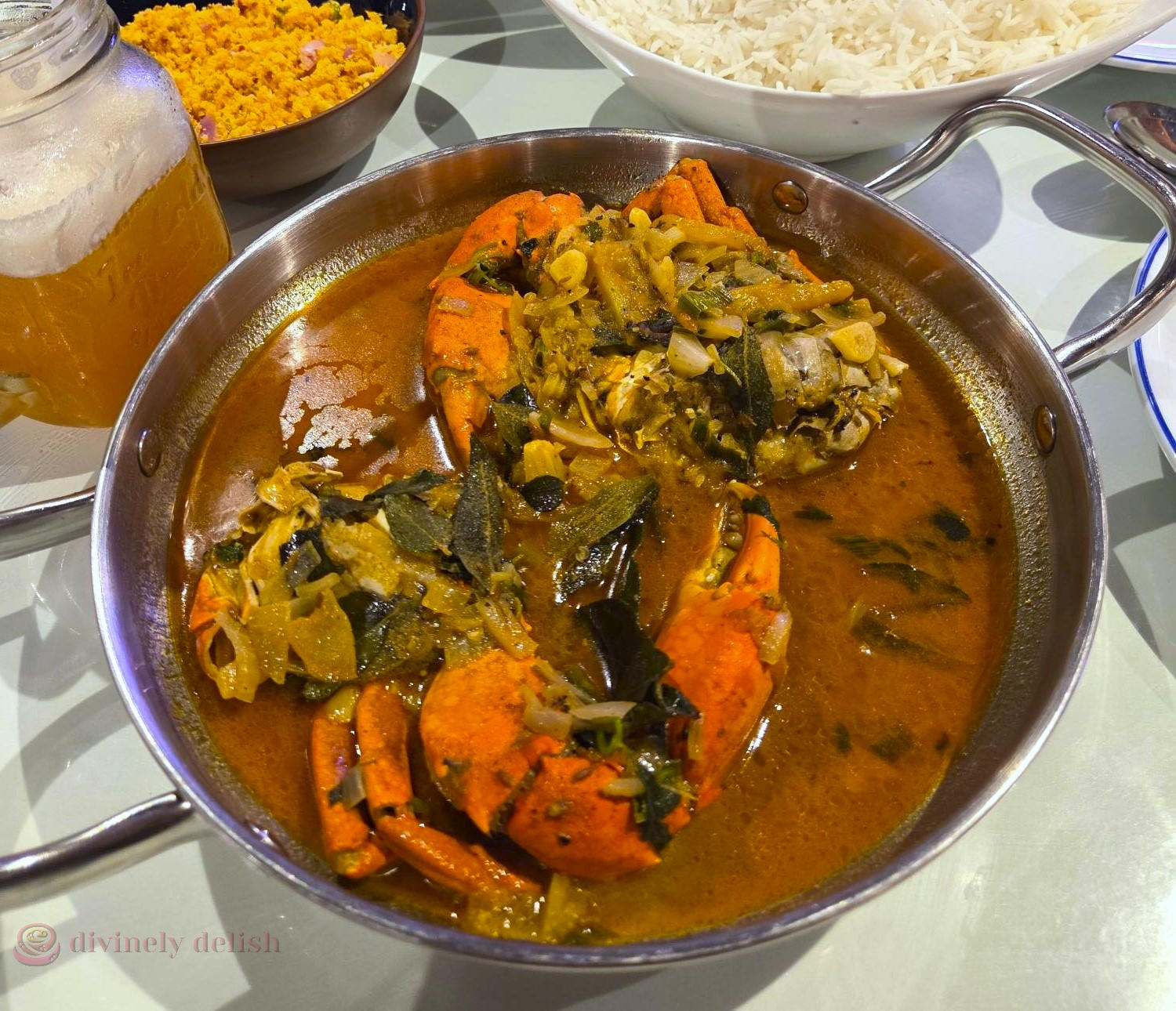
And of course, you can’t leave Colombo without tasting crab curry. Ministry of Crab is the most famous spot, but I wasn’t willing to pay their high (USD) prices. I planned to try Jaffna-style crabs at the no-frills Mayura Hotel (which isn’t actually a hotel—the term can be used for local restaurants too) in Pettah, but they were closed. Ceylon Curry Club in the Dutch Hospital precinct didn’t pan out either. On my last day in Sri Lanka, I ended up at Dampa Seafood in One Galle Face Mall, which I chose more for convenience than anything else, although I did enjoy the crab curry. Interestingly, Ministry of Crab has a branch in Kuala Lumpur (where the crabs are sourced from Sri Lanka). Comparing the menus, I noticed they were nearly identical, and while some appetizers were cheaper in Colombo, the majority of the menu was more expensive. In fact, the price difference for the crabs and prawns was quite shocking. The largest 2 kg “Godzilla” crab, for example, costs almost USD 100 more in Colombo!
Hotels (booked through booking.com)
Mount Lavinia Hotel, Colombo (US$65 / C$92 per night)
I was drawn to the historical legacy and colonial charm of Mount Lavinia Hotel, located on Lavinia Beach, one of the nicest beaches in Colombo. There are great views from the pool and terrace and the highlight of my stay was definitely the scrumptious breakfast buffet, offering both western and local favourites. The restaurant staff were also very courteous.
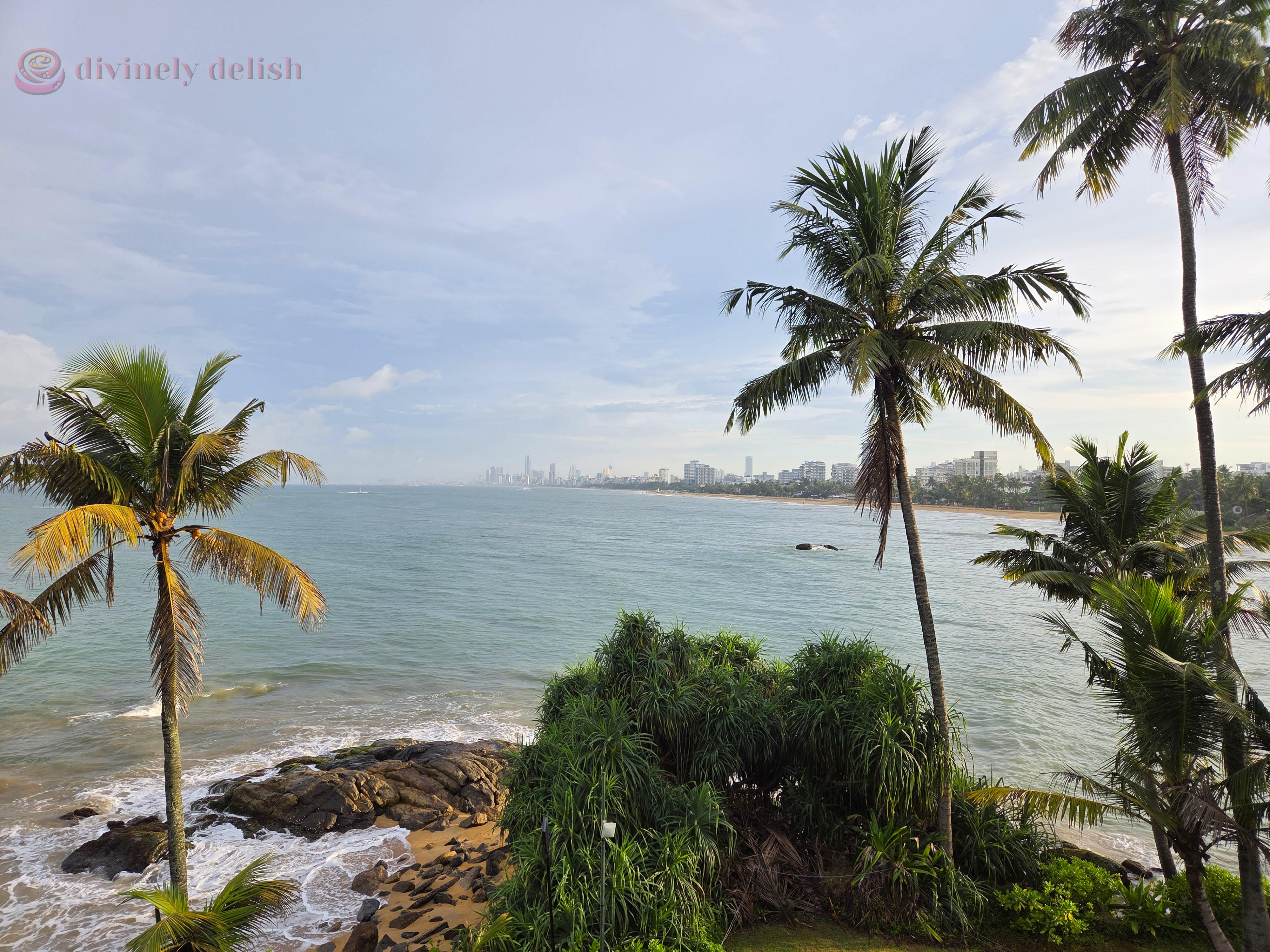
However, for a 4-star and such an iconic hotel, I didn’t expect the interior to be the way it is. There’s no air conditioning in the common areas, so it’s very muggy in the lobby and hallways. The elevators are very old and slow, and some light fixtures are missing bulbs. Most surprisingly though, was my room (Room 349). I arrived to find the door slightly ajar. I wondered if I’d arrived at the right room or if someone was inside. Thankfully, there was air conditioning. But the door only had a basic privacy lock. There was no swing bar door lock or chain lock (although you could see the holes in the door where there used to be one). The bed was made but the pillows were strewn all over the bed. There were no towels so I had to call Housekeeping. A young man brought 2 bath towels. When I asked him for a bath mat, he left and returned with a third bath towel. There was hair and debris in the toilet. The step lever on the bathroom garbage can didn’t work so the lid couldn’t open. I asked the Housekeeping lad if the bedsheets were clean, and then he noticed the pillows and quickly left again and came back with pillowcases and finished making the bed! The only good thing about the room was the view from the balcony. It’s unfortunate to see the state of this once-glorious hotel. It really needs an upgrade and the staff need better training.
Grand Oriental Hotel, Colombo (US$39.90 / C$56 per night)
Much like Mount Lavinia Hotel, the Grand Oriental Hotel is a colonial-era heritage hotel that has seen better days. Aside from some elevator issues though, my room was clean and comfortable and I had a decent stay. The best thing about this hotel is its central location, within walking distance to Pettah market, the main railway station and Dutch Hospital Shopping Precinct, and a few minutes’ ride to Port City and Galle Face Green.
Breeze Blows Inn, Ella (US$28 / C$40 per night)
The owner of this homestay was very kind and friendly. Breakfast was included and he was willing to prepare a very early breakfast for me, although I chose not to have breakfast. It’s a fairly new accommodation, and it’s clean and comfortable.
I was originally given the room on the second floor, but I had a big, heavy suitcase and didn’t want anyone lugging it up two long, narrow flights of stairs. So the owner offered me the bigger family room on the first floor. It was still one flight of stairs up, but better than the first option. So it’s just something to keep in mind if you have heavy bags—there are no rooms on the ground floor.
It would’ve been nice to have more places to hang clothes and towels, like a small closet with hangers or at least some more hooks or towel racks in the bathroom (it’s large, with plenty of space). The room sleeps a maximum of 4 guests, so I can’t imagine where everyone would hang their stuff if it were a full house.
Dream Villa Sigiriya (US$32 / C$45 per night)
This homestay is centrally located, close to many restaurants. The owners were very friendly and helpful. They even added special touches like welcome decorations in the room. My room was clean and comfortable, and there was no shortage of hot water for showering.
There’s a clothing rack with plenty of space to drape clothes, but it would have been nice to actually have some hangers to hang clothes.
There was a little bit of an issue when it came time for payment. On the booking site, it specified that this hotel takes payment in USD cash, so I had specifically set aside this money. But when I met with the owner to pay, he requested that I pay in LKR. He only reluctantly accepted USD when I said that’s all I had.
Additional Helpful Tips
The best time to visit Sri Lanka is November to April for Colombo and the west coast, December to March for the hill country, and May to October for the east coast. I arrived at the end of April, just at the start of monsoon season.
While I had accompaniment during my time in Sri Lanka, I was originally planning to go it alone. From the experiences of other solo female travellers, the general consensus seems to be that it’s overall a safe country if you take the usual precautions.
Getting a SIM card is really straightforward. Right after Immigration and baggage pick up, you’ll enter the Arrivals area where you’ll see several mobile phone service providers. The 2 main mobile networks are Dialog and Mobitel. From what I’d read online, Dialog seems to be the best option, especially in Colombo, but Mobitel has wider coverage. I was initially going to go with Dialog, but one of the airport staff ushered me over to the less-busy Mobitel booth. I was asked to pay in cash in local currency, which I didn’t have, but there are some ATM machines there where I was able to withdraw money.
While some things are cheap in Sri Lanka, don’t expect the bargain prices that you find in countries like Thailand. I was reminded of my time in Myanmar, where products and services targeted at tourists were priced in USD and hence, relatively expensive. Contactless credit card payments are accepted in larger establishments, but just in case, it’s a good idea to carry some cash in USD as some tours, attractions, hotels and upscale restaurants quote prices in USD. The surprising thing for me was the tipping culture in Sri Lanka. I assumed it would be like many countries in East and Southeast Asia where tipping isn’t the norm. But in Sri Lanka tips are very much appreciated and expected, in some cases. ChatGPT suggested I tip US$ 10-20/day for my driver and 10% in restaurants.
Final Thoughts
My journey through Sri Lanka was truly memorable, shaped by remarkable history, intricate stone carvings, and the most awe-inspiring cave temple I’ve ever encountered. From ancient cities to the misty hill country, each stop revealed a different facet of the island’s beauty. Though small in size, Sri Lanka offers an extraordinary diversity — from golden beaches and sacred sites to lush green landscapes and expansive safari plains. This trip only scratched the surface of what the country has to offer, and it left me certain that I’ll return to explore more.
One of the most unexpected highlights of the journey was the experience of travelling with a private driver who became much more than that. Sajan accompanied me to every site and temple, we shared meals and laughs along the way, and he even stepped into the role of photographer and videographer! It turned out to be more like a spontaneous road trip with a travel companion — a dynamic that added warmth and depth to the entire experience. If you’re looking for a private driver for Sri Lanka, I highly recommend that you get in touch with Sajan at https://srilankanspringtours.com/.

 Divinely Delish